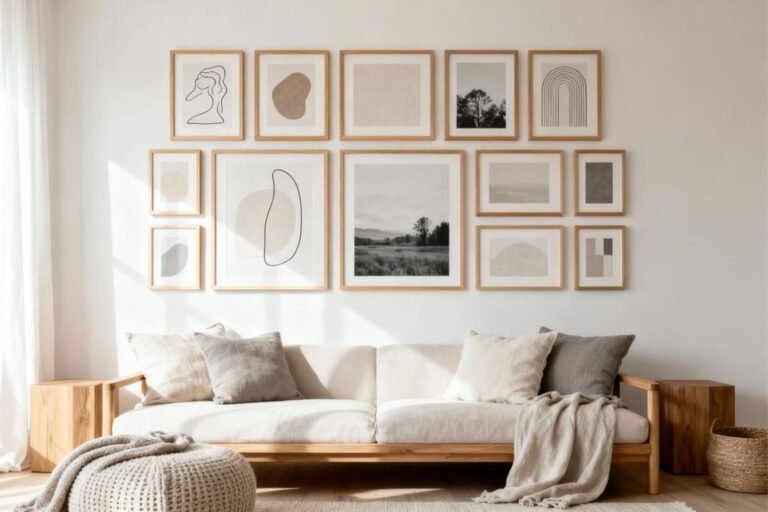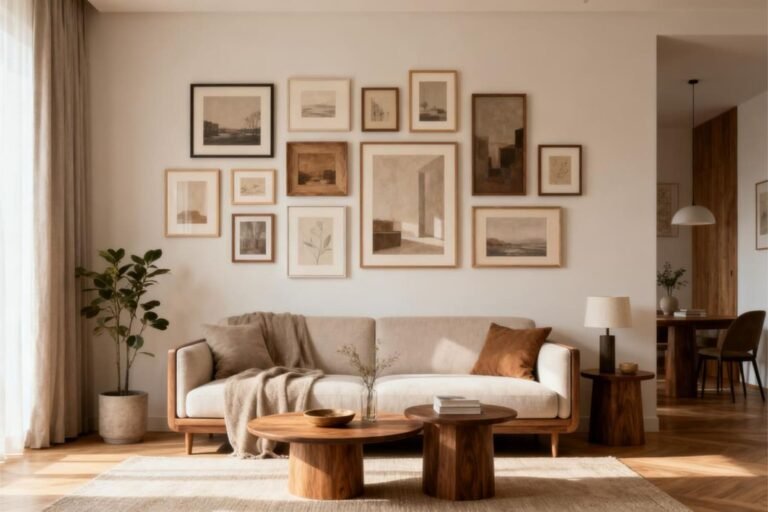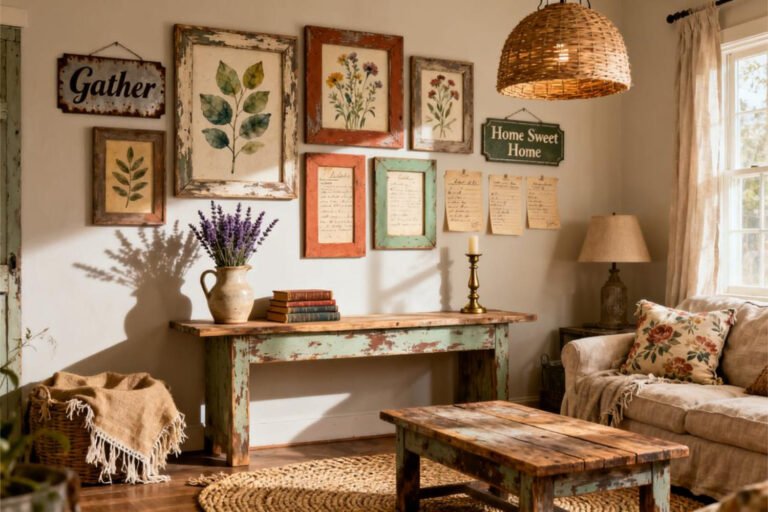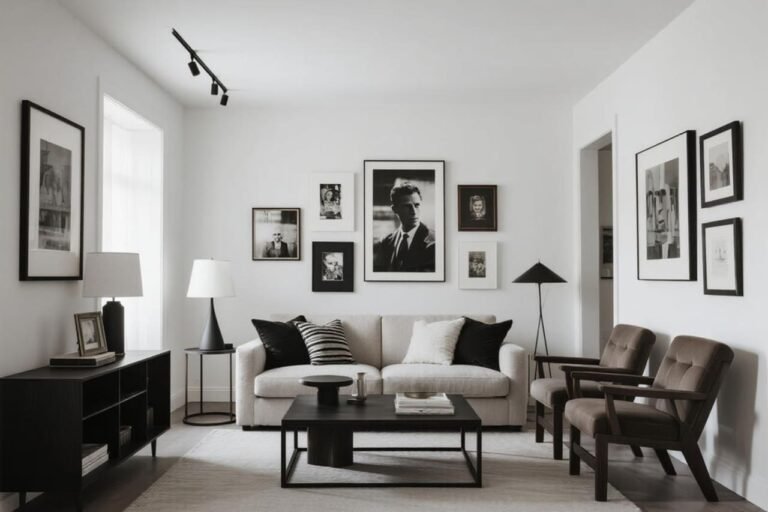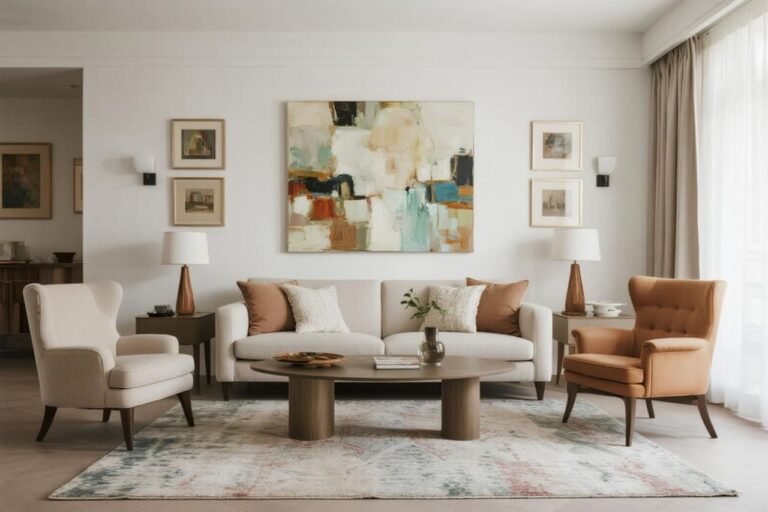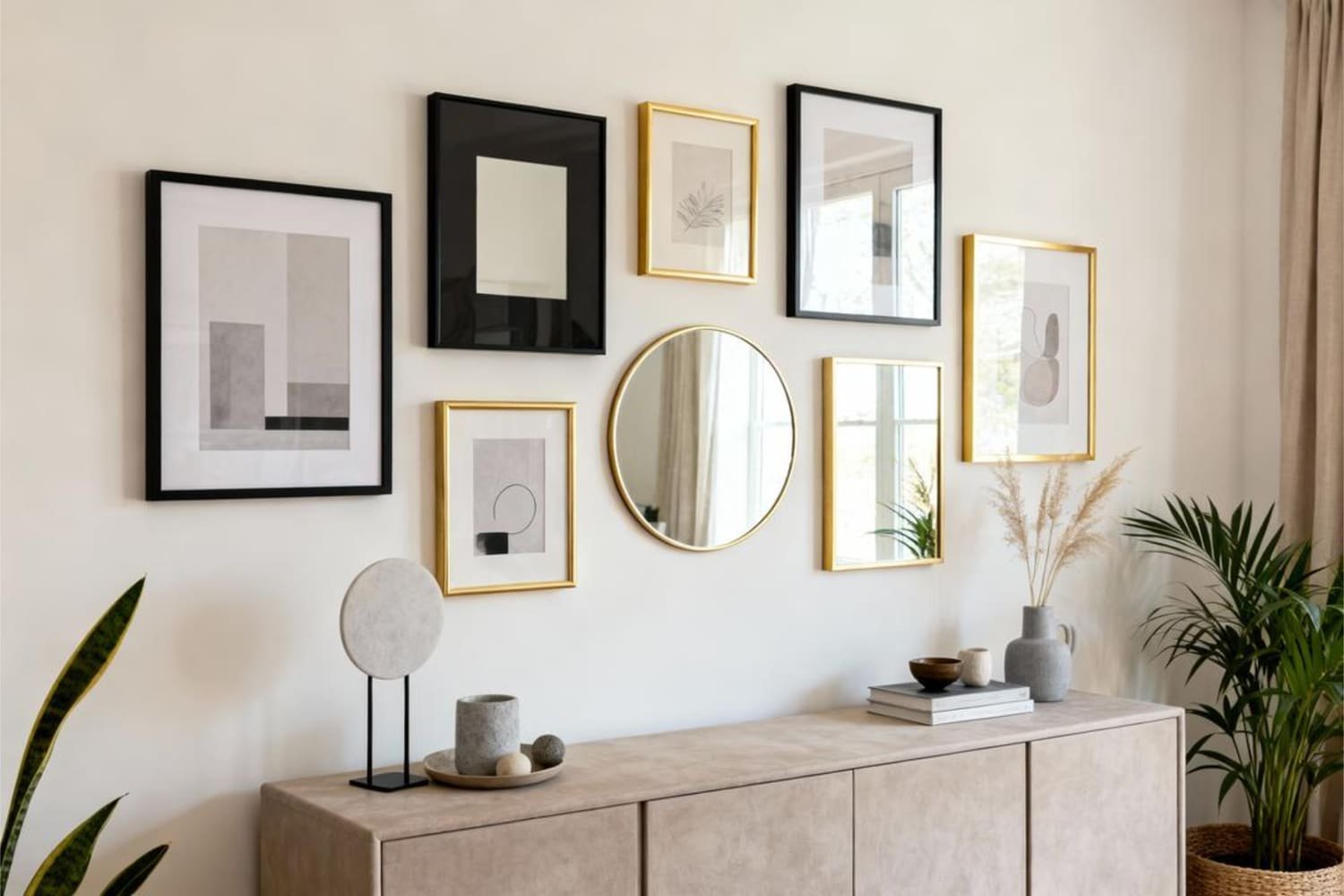
Mixing Art and Mirrors in a Gallery Wall for Extra Light
Ever walk past a gorgeous gallery wall on Pinterest and think, “Okay, but how is their hallway glowing like a movie set while mine looks like a dim cave?” Same.
And then I discovered the secret: mixing art and mirrors in a gallery wall to boost light and visual impact. Honestly, it’s one of those ideas that seems obvious after you do it.
If you want a home that feels curated, airy, and a little bit designer-magazine fabulous—with minimal effort—then creating a mixed media gallery wall with both artwork and mirrors might become your new favorite obsession.
Why Mix Mirrors With Art?
Let’s start with the big question: why even bother?
Because mirrors aren’t just for checking your hair or stalking a questionable side profile. They also:
- Reflect light (aka make dark spaces feel bigger and brighter)
- Add texture and dimension
- Break up visual monotony
- Make your artwork stand out even more
If art brings personality, mirrors bring the vibe. When you mix them together, you create a wall that feels dynamic, layered, and intentional — not just “stuff I stuck on the wall because I panicked.”
And yes, I’ve done that too.
Choosing the Right Mirrors for a Gallery Wall
Alright, before you run out and grab the first mirror you see (which will probably weigh 87 pounds and require tools you don’t own), let’s talk strategy.
Go for Variety (but not chaos)
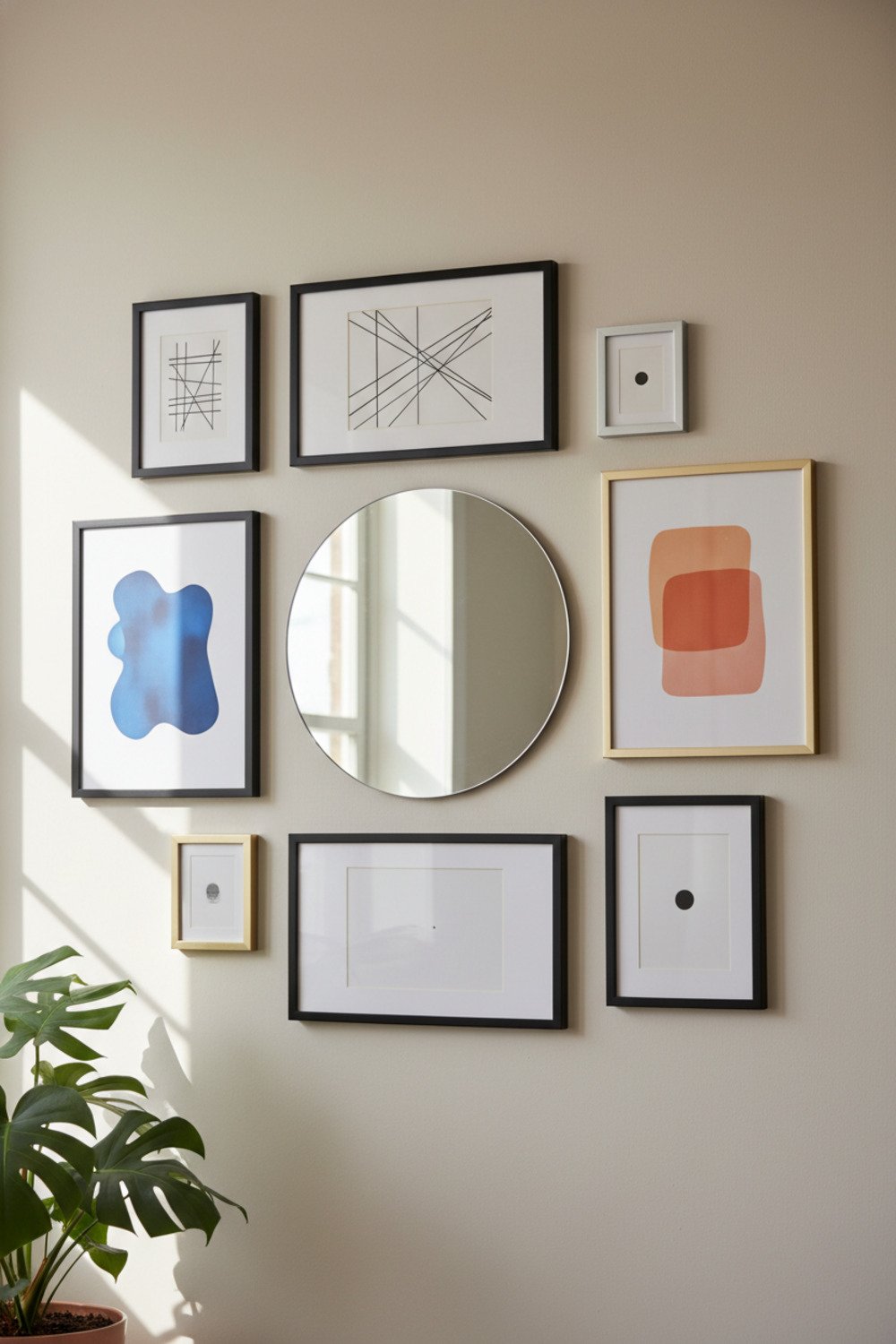
Mirrors come in tons of styles — ornate, minimalist, rustic, round, geometric. The trick? Balance.
Choose mirrors that complement your art, not overpower it. For example:
- Clean modern frames pair well with abstract art.
- Vintage gilded mirrors work beautifully with classical prints or portrait art.
- Rattan or boho mirrors vibe well with natural or botanical pieces.
Too many styles, and your wall screams chaos. Too matchy-matchy, and it feels like a hotel lobby. Aim for that sweet spot: cohesive, but not predictable.
Mix Different Shapes
Circles + rectangles = your best friend.
Why? Because different shapes break visual stiffness and give the layout movement.
Use at least one round mirror. Trust me. It softens everything instantly.
Choosing Artwork That Works With Mirrors
You have endless options, but not every piece will shine next to a mirror (pun 100% intended).
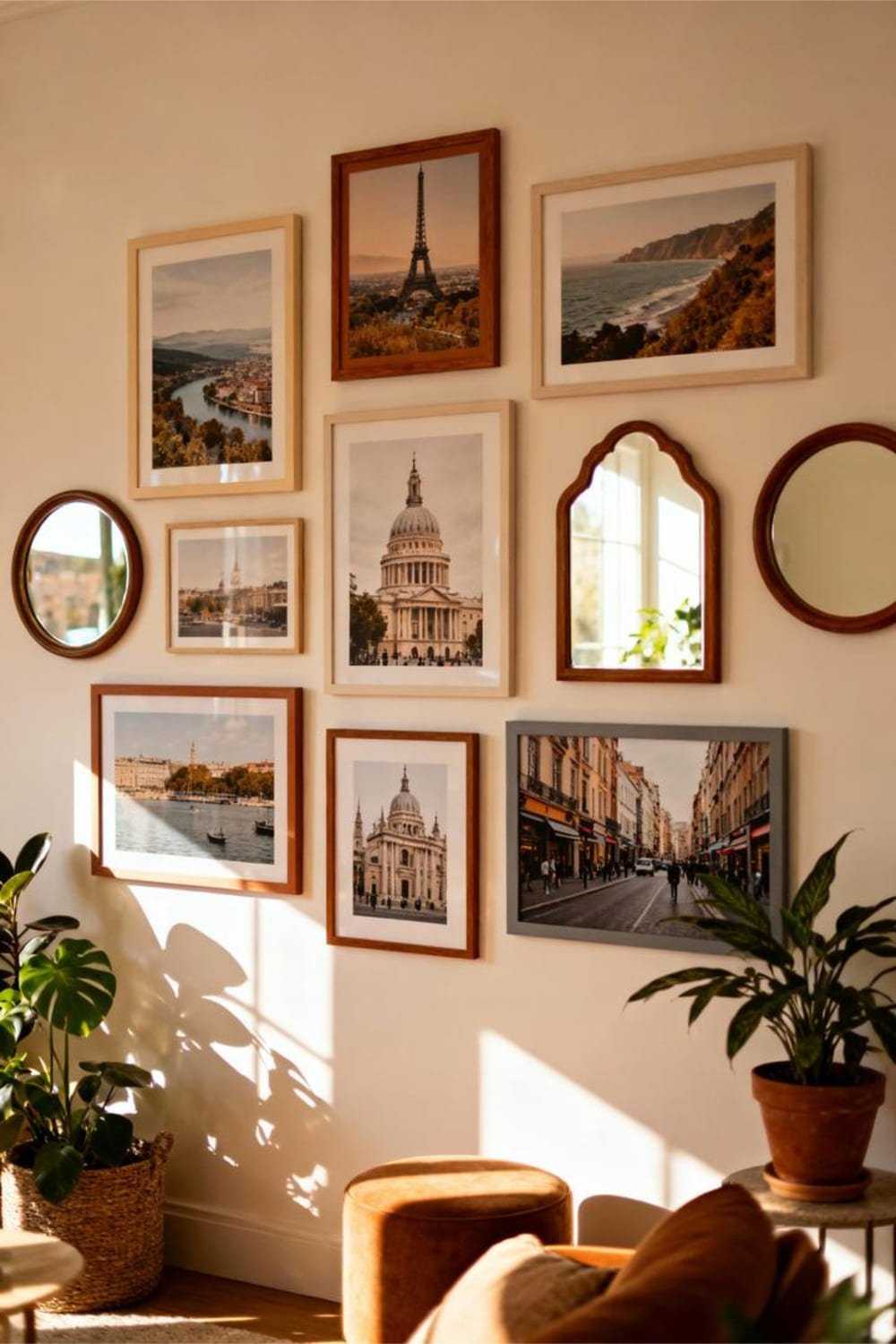
Here’s what works best:
Bold, Defined Subjects
Mirrors reflect light — not color or detail — so prints with clear subjects help balance the reflection.
Think:
- Black and white gallery prints
- Minimalist line drawings
- Travel photography
- Vintage sketches
- Abstract color blocks
Different Sizes, Same Energy
You want your art and mirrors to feel like they belong together, even if they’re different shapes and themes. Color palette, tone, and framing style matter more than subject matter.
IMO (there’s my 1 allowed slang moment), if everything looks like it could hang out at the same stylish dinner party, you’re golden.
Planning Your Layout
Before you start hammering nails into the wall like you’re starring in a home improvement show, pause.
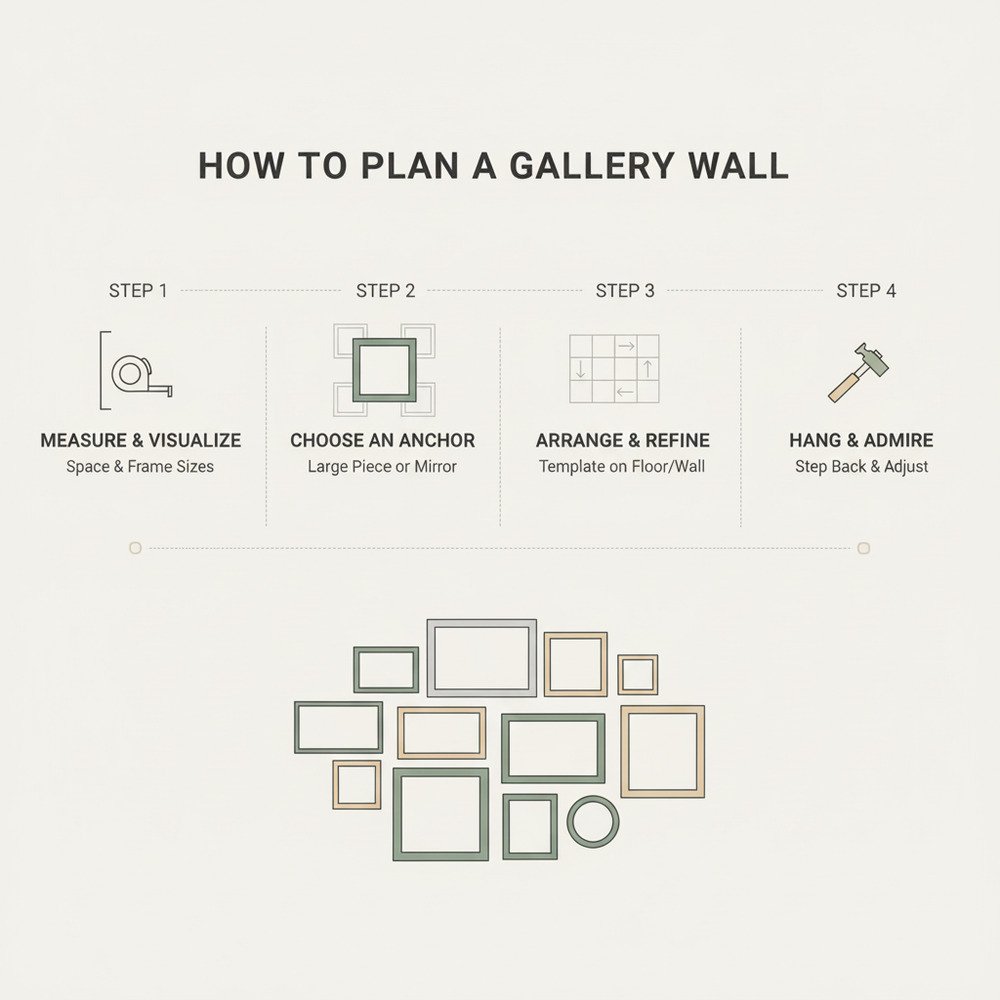
Do a dry run.
Step 1: Measure the space
Decide your gallery wall boundaries. Are you going full statement above a sofa? A subtle hallway moment? A staircase drama vibe?
Knowing the space helps determine how many pieces you need.
Step 2: Start with the biggest piece
Always anchor your layout with the largest art piece or statement mirror.
Then work outward with medium and small pieces.
This keeps everything feeling balanced instead of random.
Step 3: Sketch or lay it out on the floor
Trust me — doing this saves tears, drywall damage, and existential crises.
Where to Hang a Mirror + Art Combo
Pretty much anywhere — but some spots work extra well because mirrors help bounce light into dull areas.
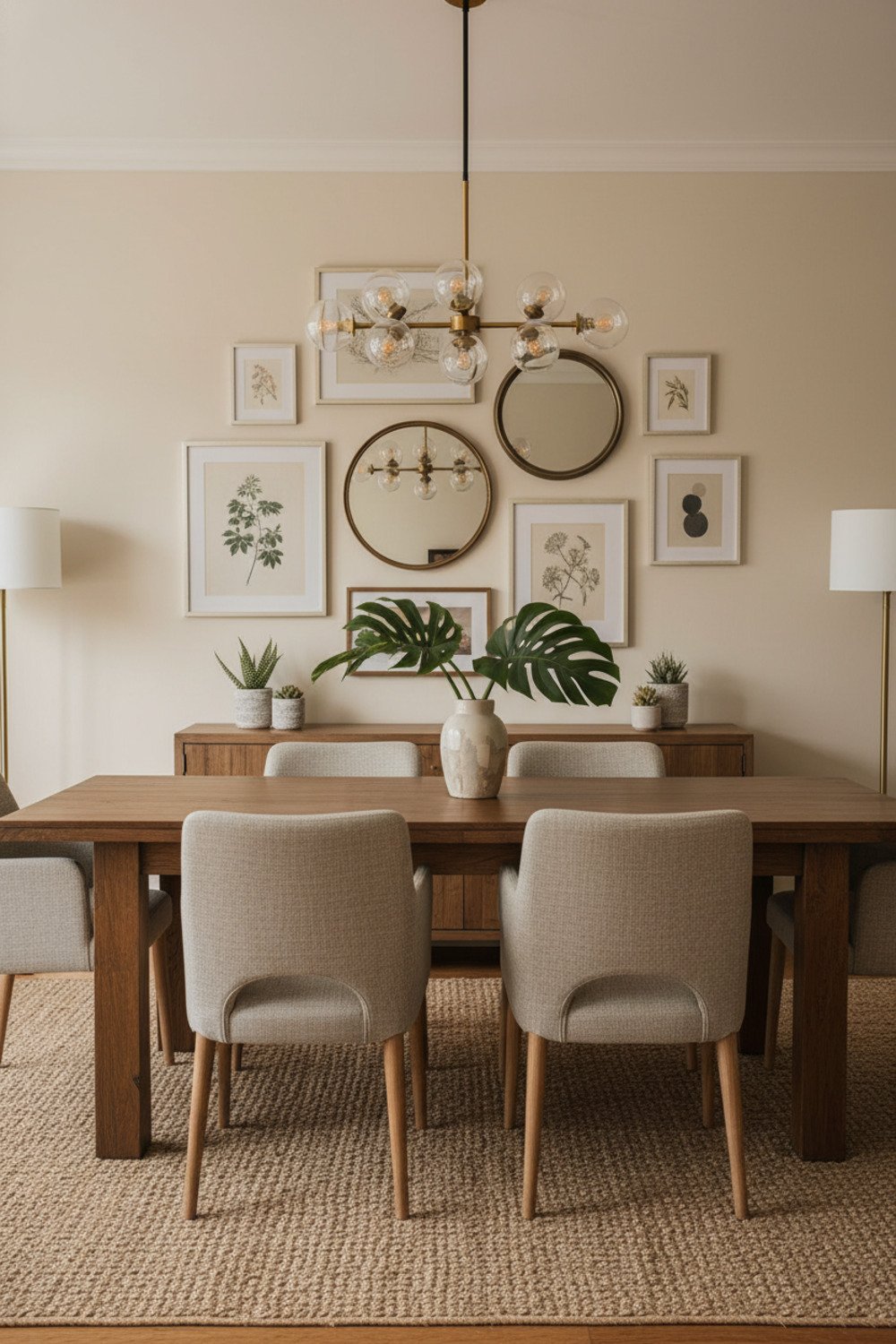
Here are the best locations:
- Hallways (because they’re usually dark and sad-looking)
- Above sofas
- Staircases
- Dining rooms
- Bedrooms
- Entryways
Entryways in particular? Chef’s kiss. A mirror helps with last-minute “Do I look alive?” checks on your way out the door.
Balancing Proportion and Visual Weight
Mirrors are visually heavier than art because they reflect depth. So you need balance.
Here’s what helps:
- Use symmetrical spacing around large mirrors.
- Surround mirrors with medium and small artwork.
- Don’t place two mirrors side by side unless you want an optical illusion hallway moment.
And unless that’s what you’re going for, in which case—power move.
Framing Style Matters
Frames tie everything together.
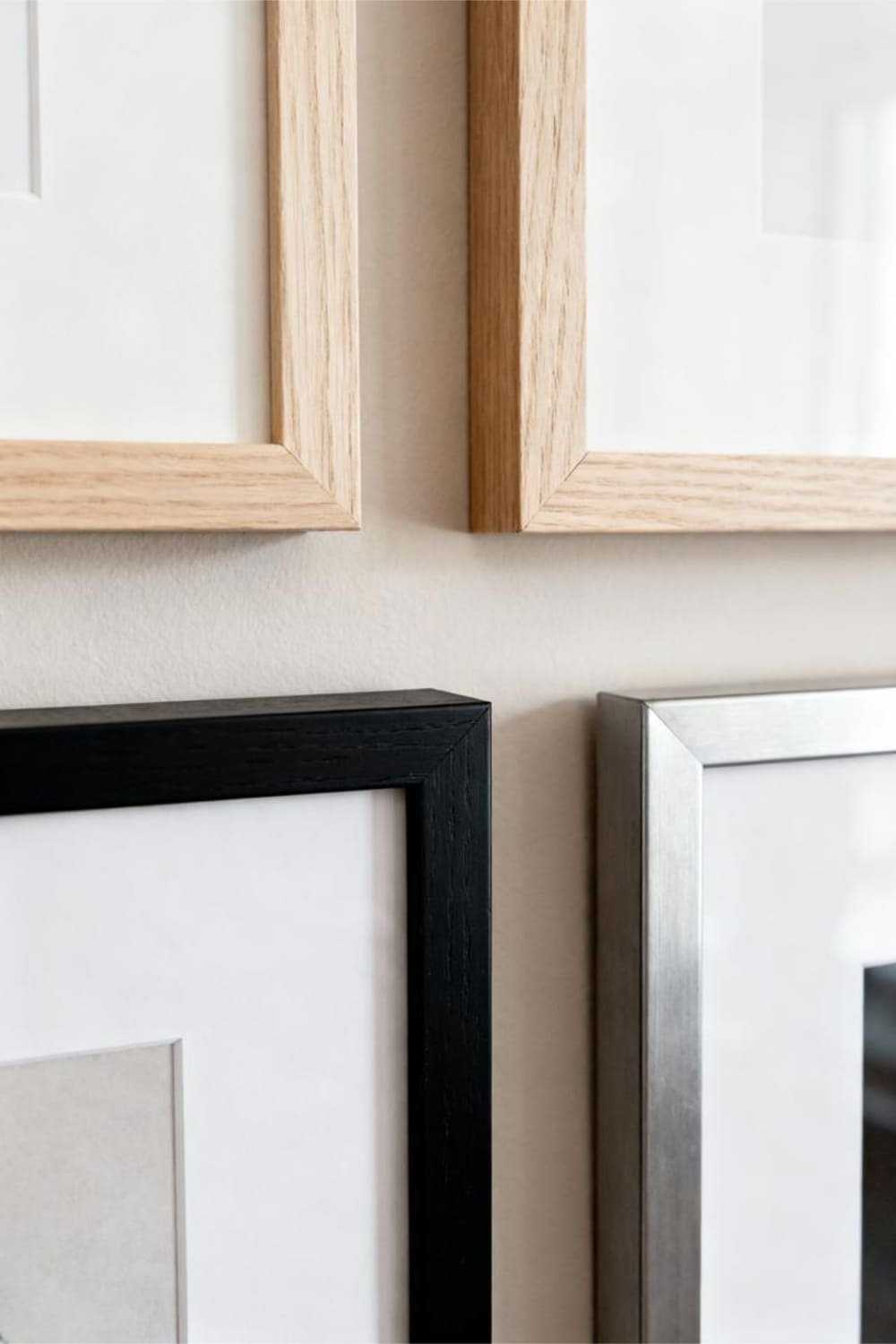
Try one of these approaches:
Option 1: Matching Frames
• Sleek
• Minimal
• Clean
Perfect if you want a modern, cohesive look.
Option 2: Mixed Frames
• Gold + wood + black
• Aged + new
• Texture variation
This creates a curated, collected-over-time feel (aesthetic bonus: guests assume you’re well-traveled).
Option 3: Mirror Frame as the Accent
Use a bold or unexpected mirror as a statement piece and let simpler frames support it.
Lighting: The Secret Ingredient
Mirrors amplify light — but only if they have something to bounce.
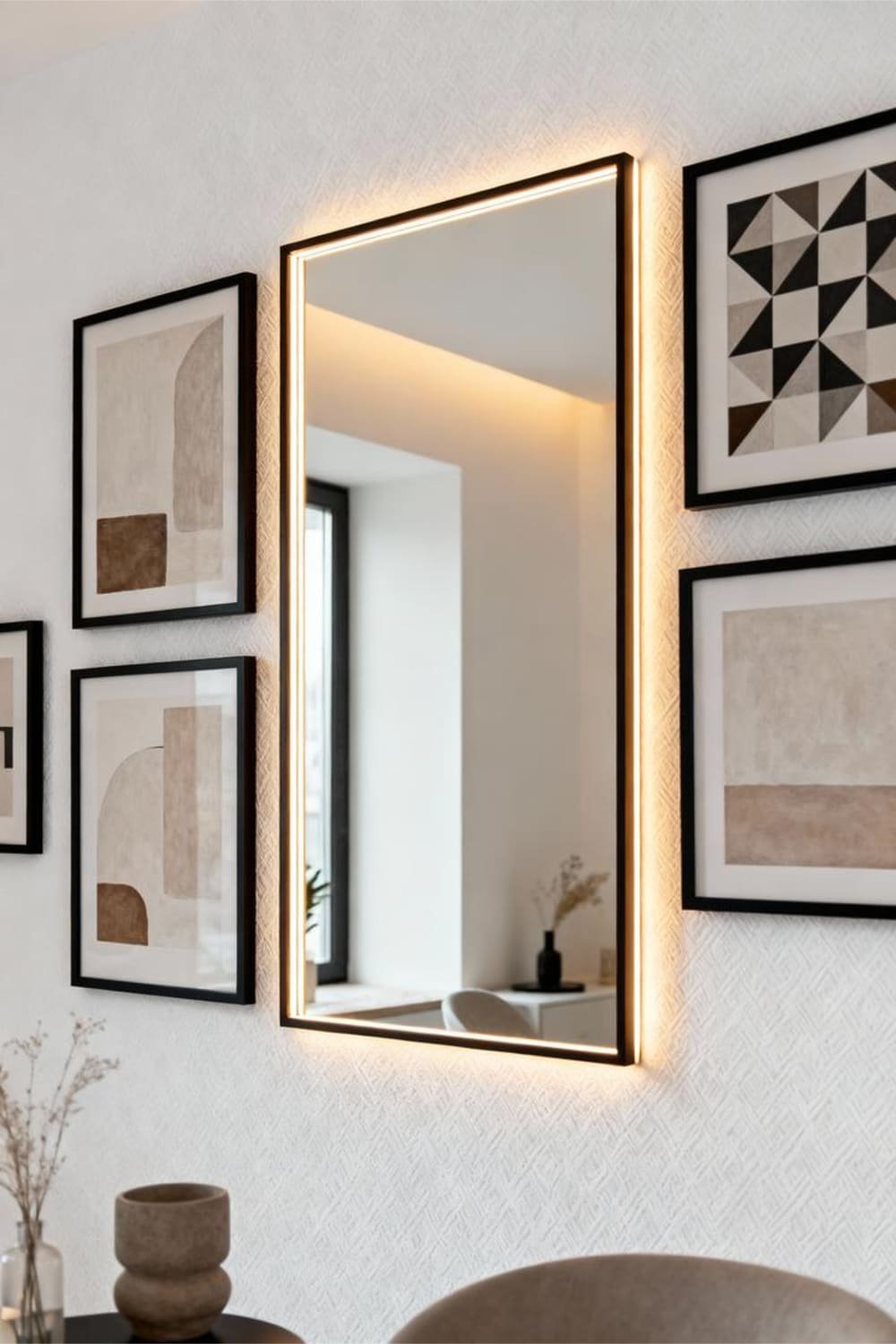
So add:
- Picture lights
- Wall sconces
- LED strips
- Table lamps nearby
When warm lighting hits a mirror and artwork combo, the whole space glows.
Ever walked into a fancy boutique and thought, “Why does everything look so expensive?” Yeah — strategic lighting plus reflective surfaces.
Common Mistakes to Avoid
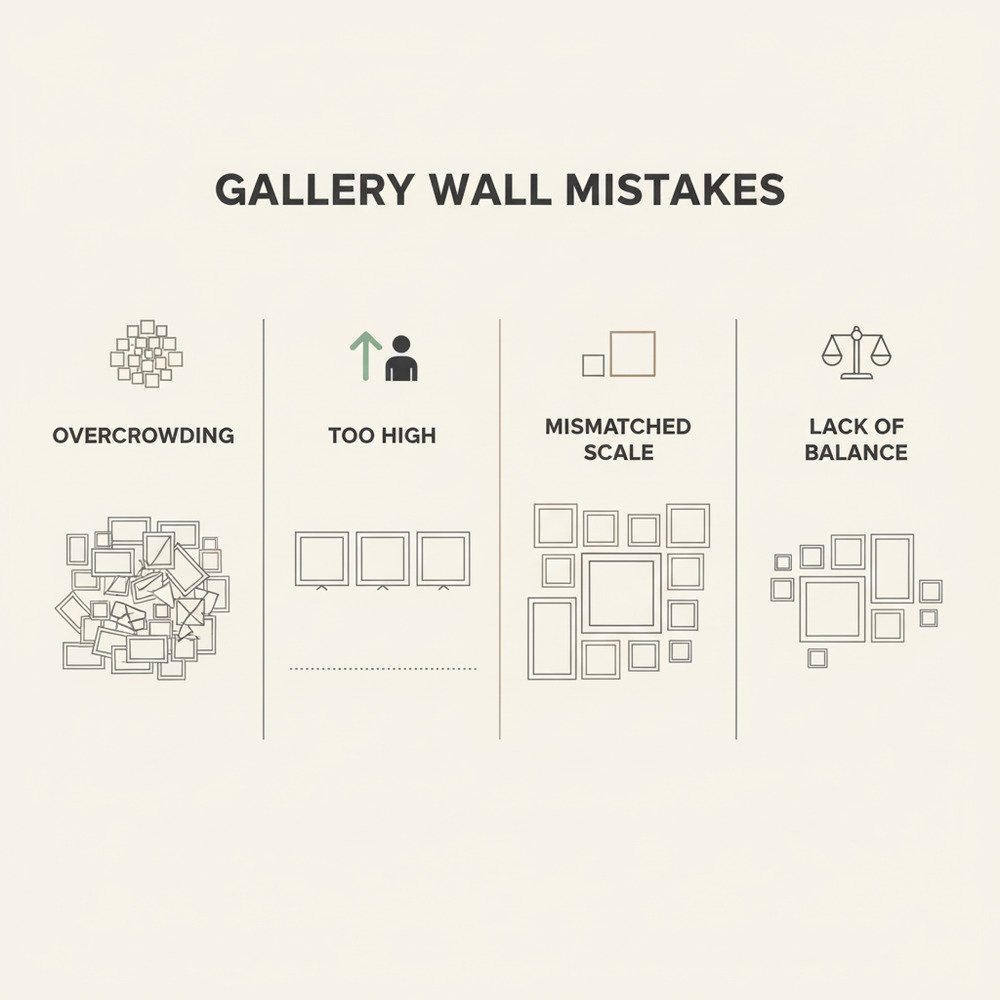
Let’s save you from doing The Things We All Regret™.
❌ Overcrowding
More is not always better. Leave breathing room.
❌ Hanging everything too high
Eye level is your friend — unless you’re 6’7”. Then maybe lean toward universal human height.
❌ Using only one mirror
One mirror = feature. Multiple mirrors = gallery magic.
❌ Choosing art that competes with the mirror
Bold mirror + bold art = chaos. Pick one hero.
A Quick Style Breakdown: Your Options
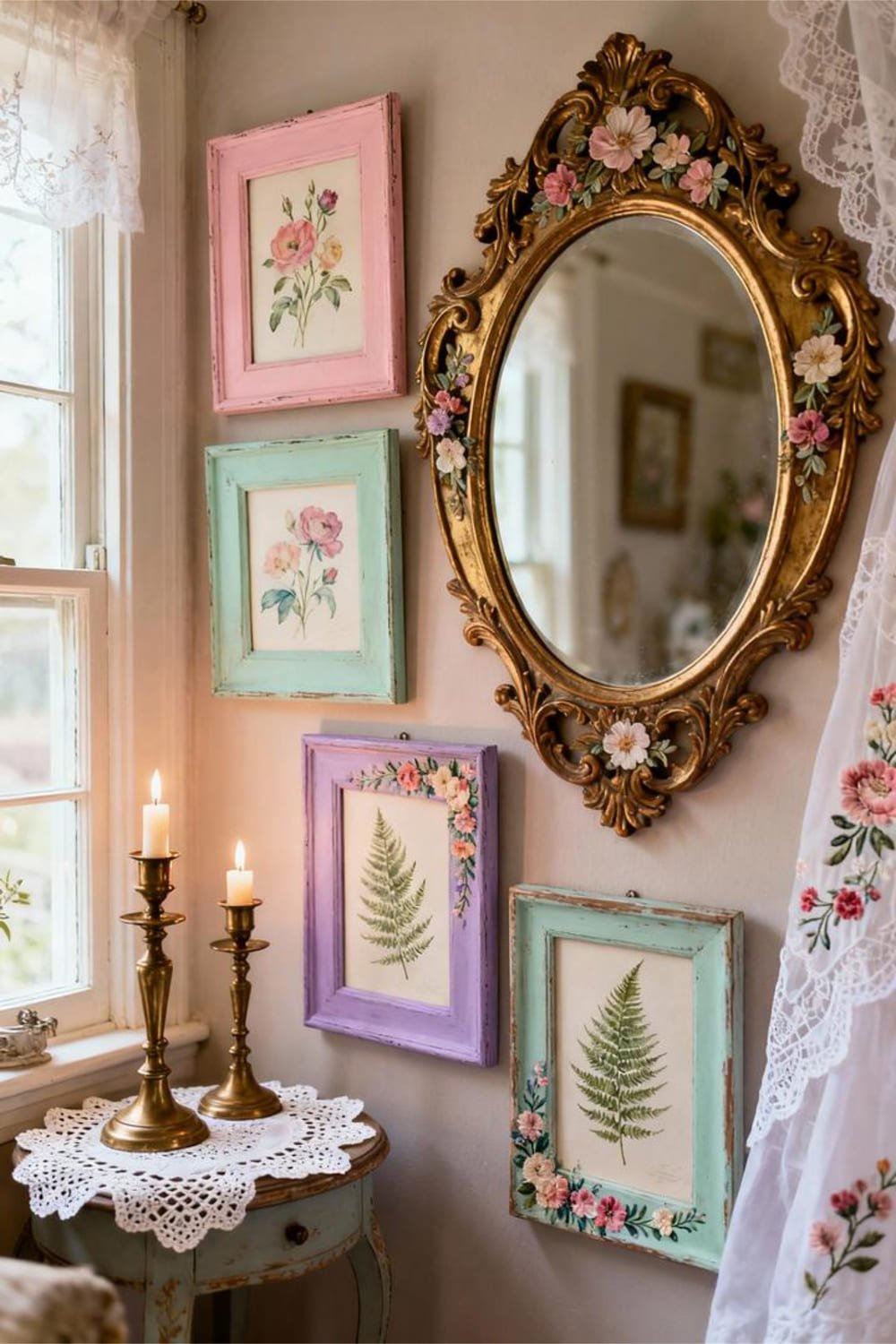
Here are some aesthetic combos that work beautifully:
Modern Minimal
- Thin black frames
- Two round mirrors
- Black and white photography
→ crisp, gallery-level chic
Vintage Romantic
- Gilded mirror
- Botanical prints
- Soft pastels
→ dreamy and timeless
Eclectic Boho
- Rattan mirror
- Travel prints
- Floating canvas textures
→ warm, layered personality
Industrial Urban
- Metal-framed mirror
- Monochrome abstract prints
→ bold and architectural
Final Thoughts
Mixing art and mirrors in a gallery wall doesn’t just make your home prettier — it makes it feel lighter, bigger, and more intentional.
And honestly? It’s fun. There’s something satisfying about arranging pieces until the whole wall feels like you.
So grab your prints, choose a mirror (or three), sketch your layout, and go for it.
And if you mess up a hole? Patch exists. 🙂
Now go create that bright, personality-packed gallery wall — and enjoy the ✨extra glow✨ every time you walk past it.