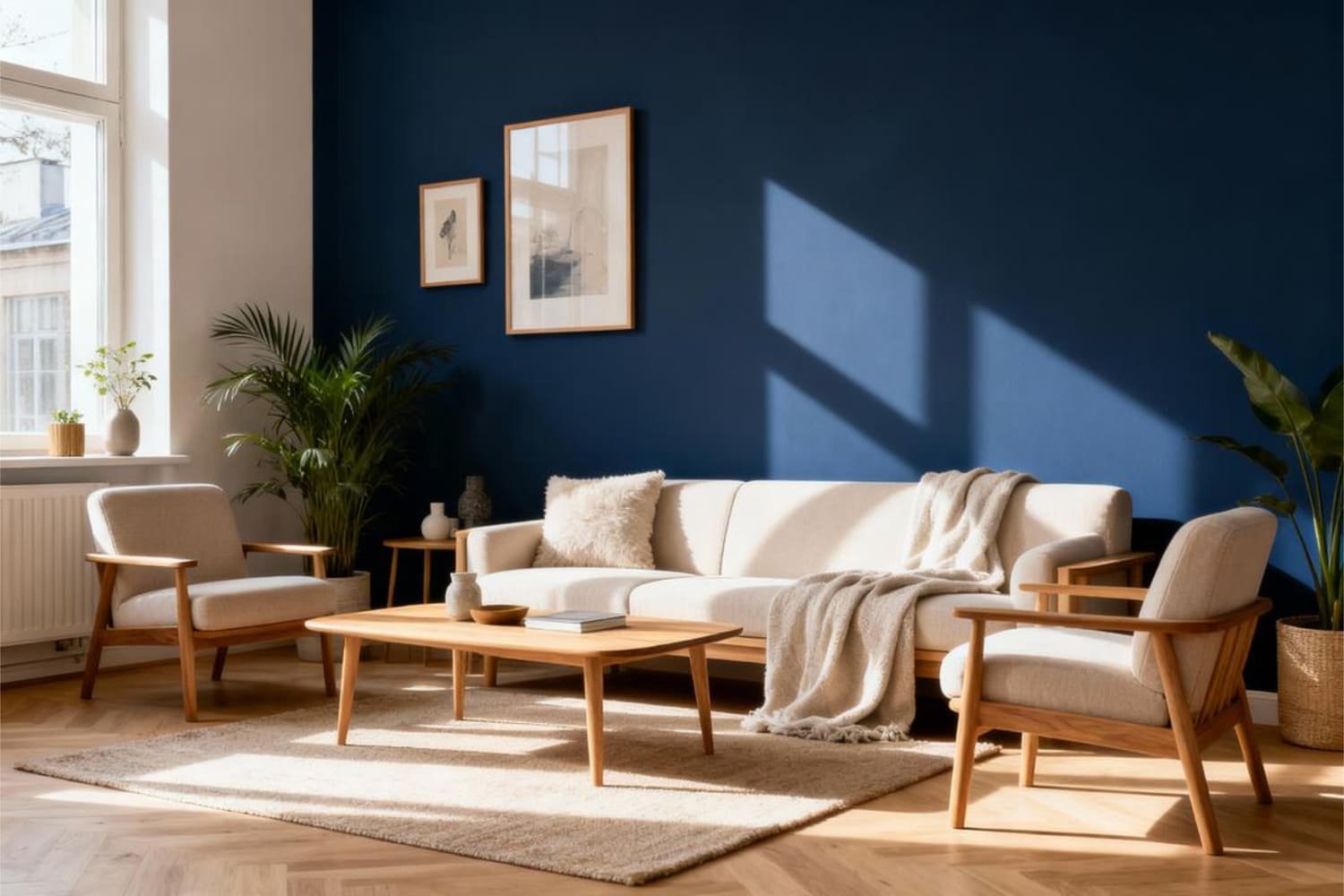
Small Space Accent Walls: Big Style in Tiny Rooms
Ever walked into a tiny room and thought, “Wow… this feels kind of blah”? Yeah, same. Small rooms can feel tricky because you don’t want clutter, but you also don’t want to fall asleep looking at plain white walls every day.
Accent walls totally solve that problem. They add style, dimension, and a little bit of attitude — without filling the room with furniture or making it feel cramped. Pretty great, right?
I’ll be honest: the first time I added an accent wall in a small room, I thought the whole space would start closing in and swallow me alive. Spoiler: it did not. Instead, it looked intentional, elevated, and if I’m being dramatic… transformative.
So if you want big style in a tiny room, stick around.
Why Accent Walls Work in Small Spaces
Let’s start with the “why.”
Accent walls help draw the eye to one focal point. And in a small room, that focused visual hierarchy matters — because it gives the space purpose.
Ever walked into a room and didn’t know what to look at? Yeah, that’s a design fail.
Accent walls fix that.
Benefits of Accent Walls in Small Rooms:
- Add personality without clutter.
- Create depth and make a room feel bigger.
- Highlight architectural features (hello alcoves, fireplaces, and awkward corners).
- Change the vibe instantly without redoing everything else.
I mean, paint is cheaper than therapy and home renovations, so that’s a win.
Choosing the Best Wall to Highlight
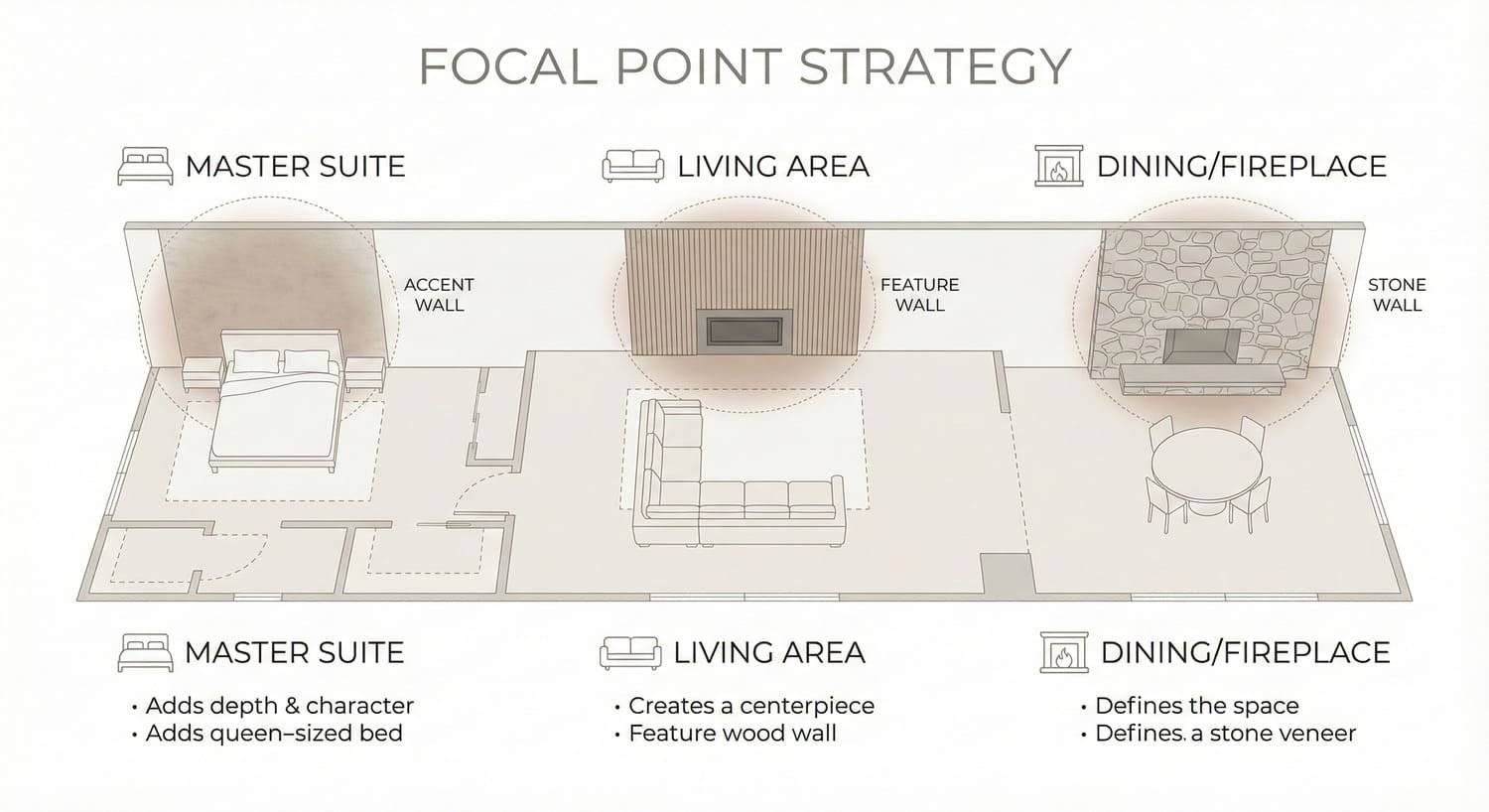
Not all walls deserve the spotlight — some are background actors. Let’s help you find the star.
The Ideal Wall Is Usually:
- The wall behind the bed
- The wall behind the sofa
- The wall with a fireplace
- The wall opposite the entry point
- A wall with built-ins or interesting structure
Ask yourself: Which wall naturally draws your eye?
If the answer is “none,” don’t worry — you get to choose the drama. 🙂
Best Accent Wall Styles for Small Spaces
Here’s where the fun begins. You’ve picked the wall, now you pick the style.
I’ll walk you through the most popular — and IMO — the most effective options.
🎨 1. Bold Paint Color

Paint is the easiest, fastest, and cheapest way to create an accent wall.
Bold colors that work well in small rooms:
- Deep navy
- Forest green
- Charcoal gray
- Terracotta
- Warm beige or putty tones
Want a hack?
Use matte finishes for sophistication and semi-gloss to emphasize texture.
🧱 2. Textured or Patterned Wallpaper
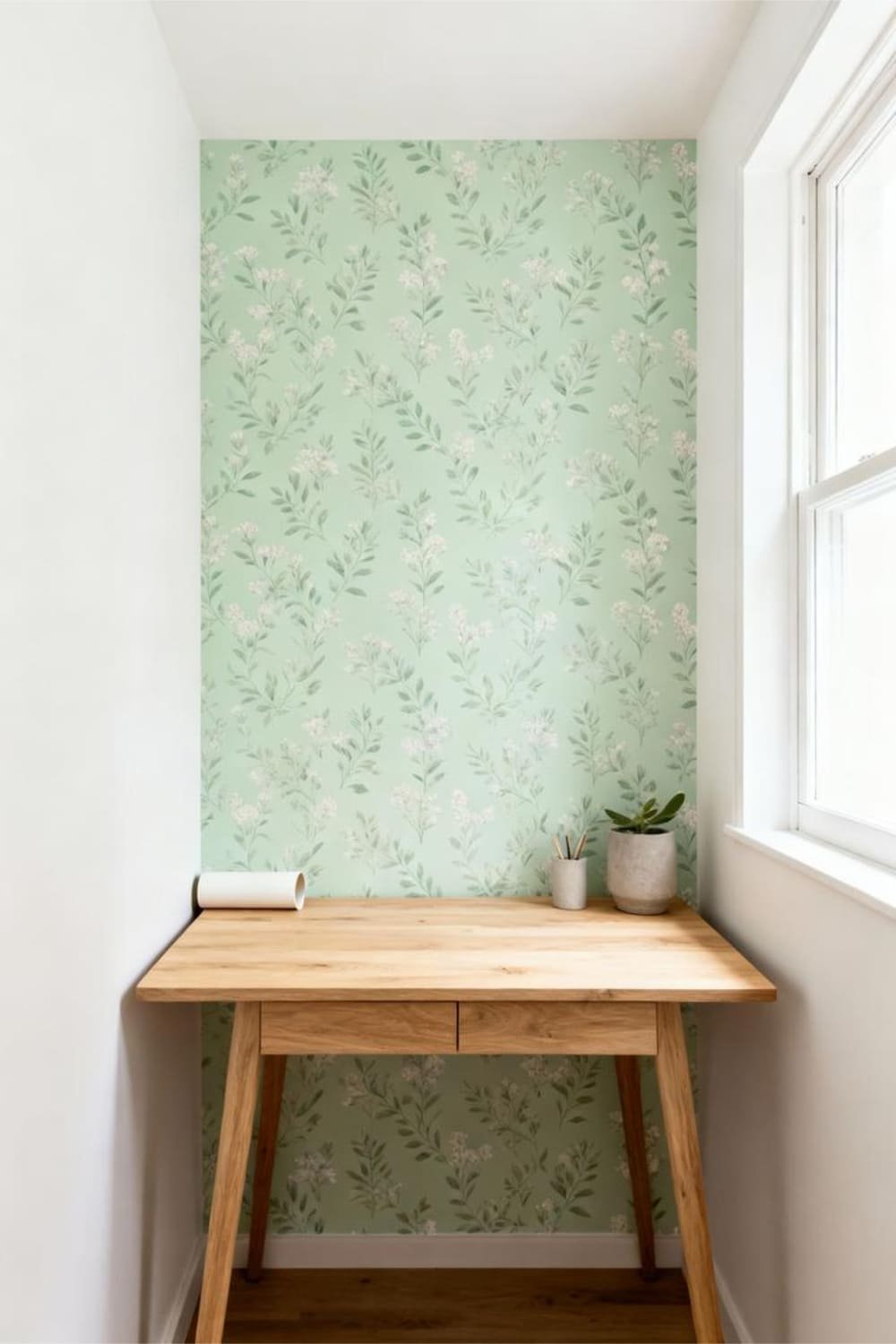
Wallpaper used to feel like a commitment — like signing a 10-year contract. Now? Peel-and-stick exists. We love that.
Great small-space wallpaper options:
- Geometric prints
- Botanical patterns
- Abstract watercolor
- Minimal line art
- Soft tonal stripes
Just don’t choose wallpaper with massive repeating images unless you want your room to feel like a funhouse mirror.
🪵 3. Wood or Paneling Accent Walls
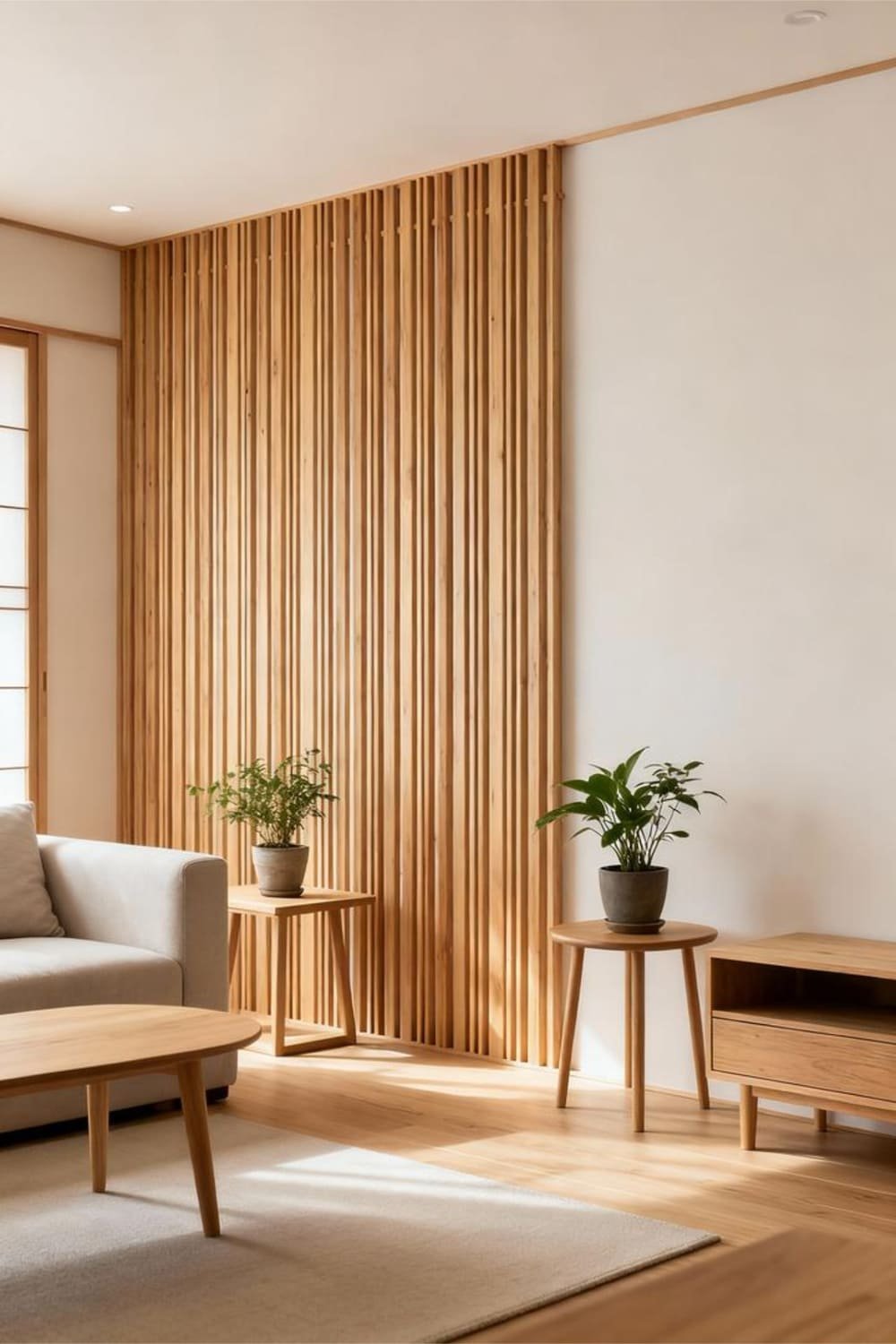
Wood adds depth and warmth that instantly elevates small spaces.
Popular looks:
- Vertical slat panels
- Shiplap (painted or natural)
- Board-and-batten
- Reclaimed wood
Vertical paneling makes your room feel taller; horizontal lines make it feel wider. Pick your illusion.
🎨 4. Color-Blocked Accent Walls
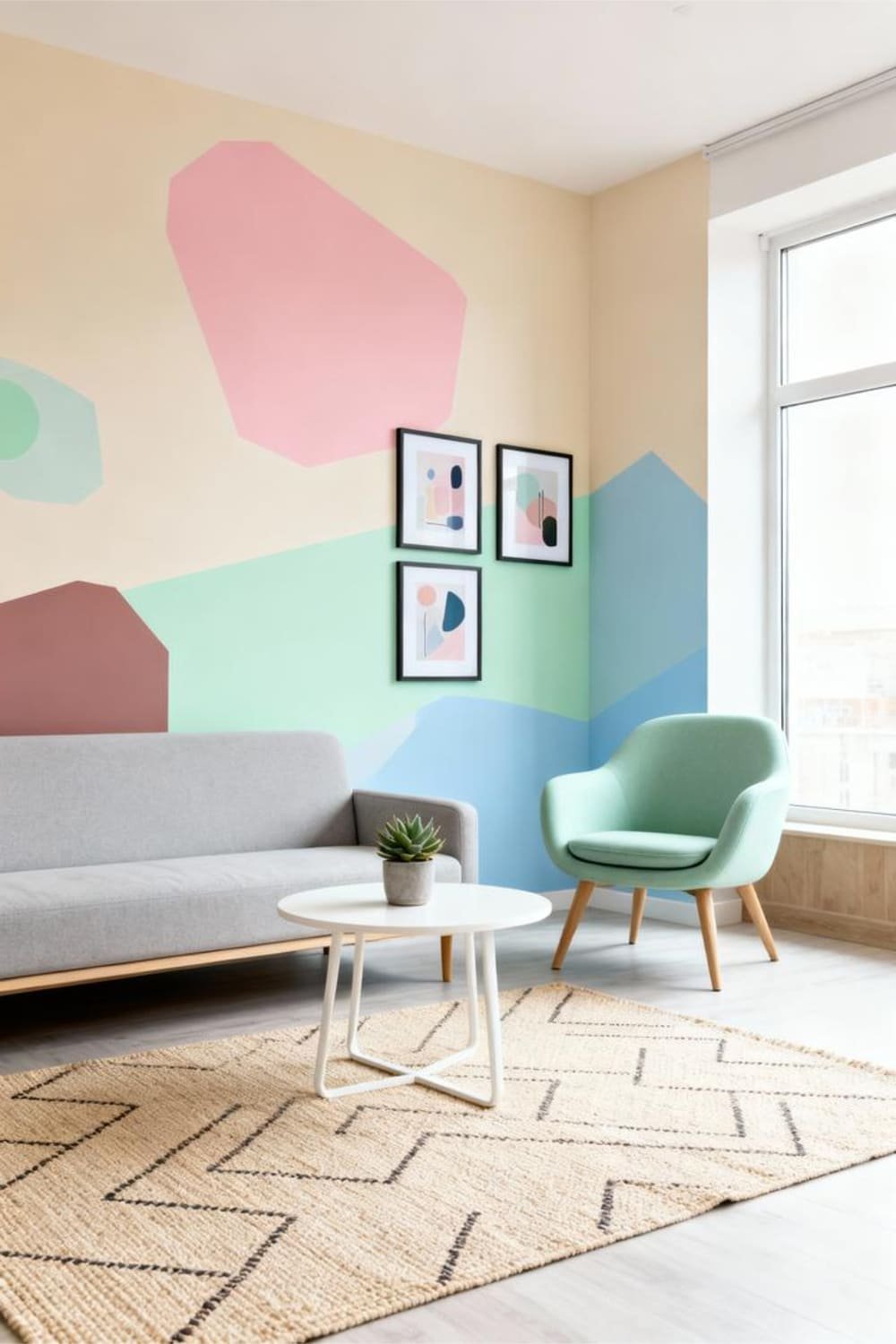
This one feels trendy but also timeless.
Instead of coloring the whole wall, create:
- Arches
- Geometric shapes
- Blocks behind furniture
This works especially well in studio apartments or multifunction rooms.
🖼️ 5. Gallery Wall as the Accent
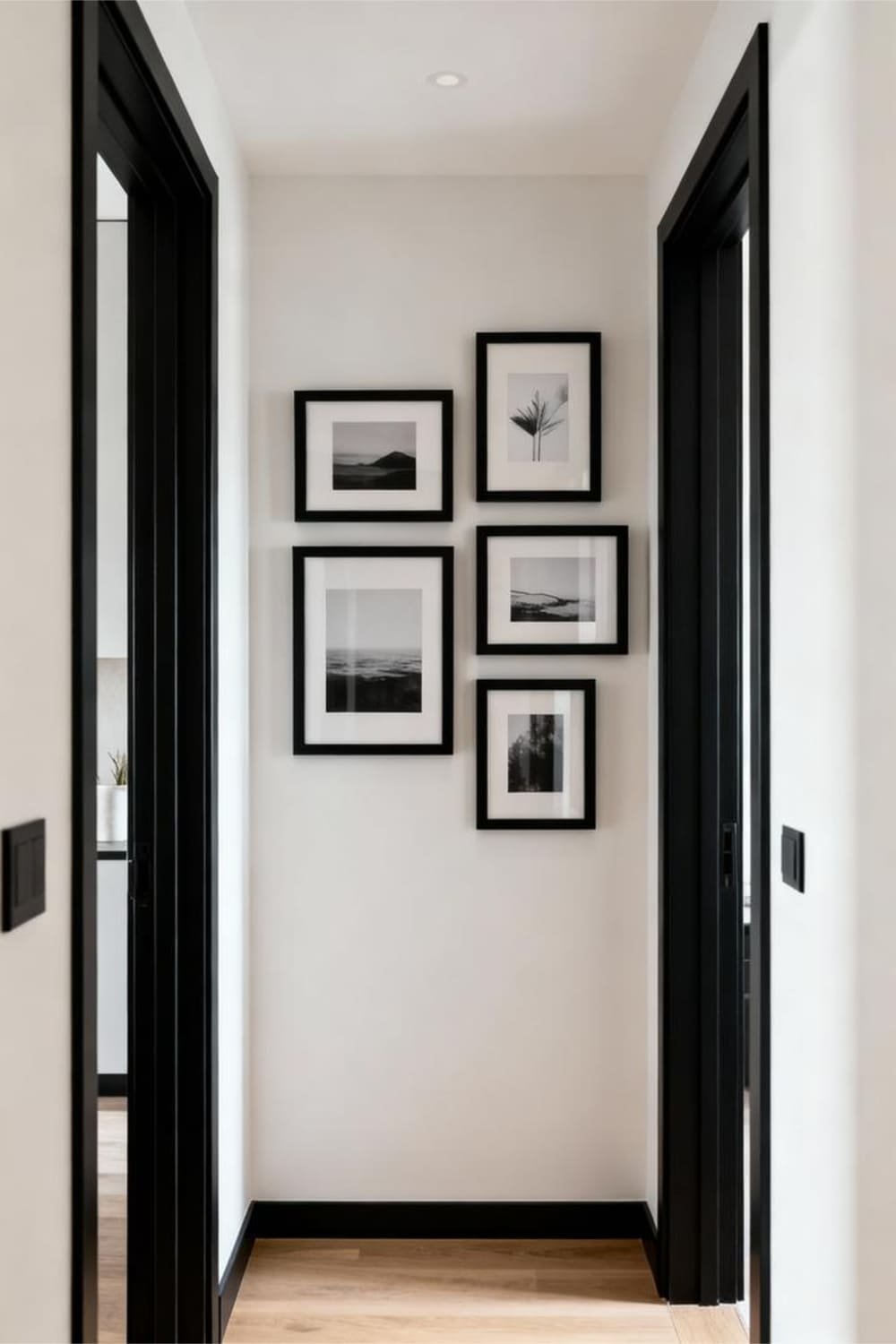
Not into paint or texture? Totally fine.
A gallery wall can become the accent — especially with coordinated frames or oversized art.
Tips:
- Stick to one color frame tone
- Mix sizes and vertical/horizontal layouts
- Keep a consistent theme or palette
This creates bold visual interest without overwhelming.
Choosing the Right Color (Without Second-Guessing Yourself Forever)

If you’ve stared at paint samples for more than 3 days straight… congratulations, you’re officially one of us.
Here’s a quick cheat sheet.
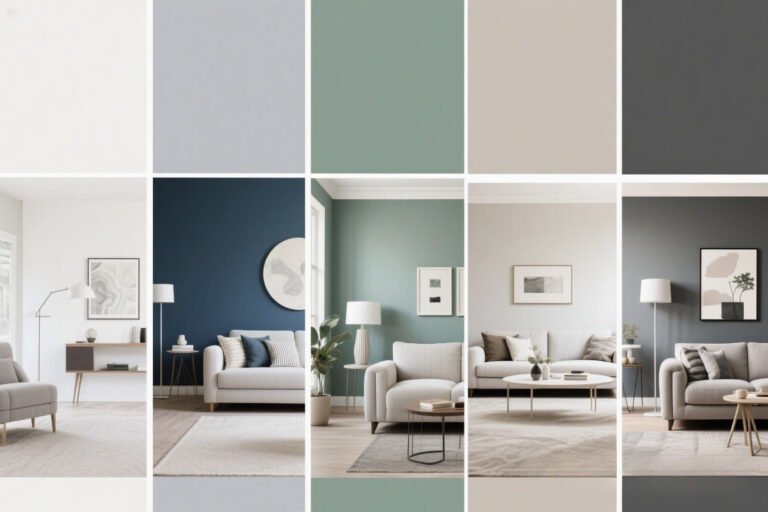
Best Accent Colors for Small Rooms:
| Style Vibe | Color Type | Examples |
|---|---|---|
| Cozy & warm | Earthy tones | Clay, camel, olive, deep beige |
| Bold & modern | Dark tones | Charcoal, navy, emerald |
| Light & airy | Soft tones | Dusty blue, warm taupe, pale sage |
| Playful & upbeat | Saturated brights | Mustard, coral, teal |
Rule of thumb:
Choose a color that is two to three shades darker than the rest of the room.
Pairing Decor With Your Accent Wall

The accent wall creates the stage — now you decorate thoughtfully so the room still feels balanced.
Complement Instead of Competing:
- Keep surrounding decor simple
- Repeat the wall color in small accents (pillows, vases, frames)
- Choose minimalist decor rather than clutter
Ever seen someone put everything on their accent wall? Yeah… don’t do that.
Common Mistakes (AKA: What Not To Do)
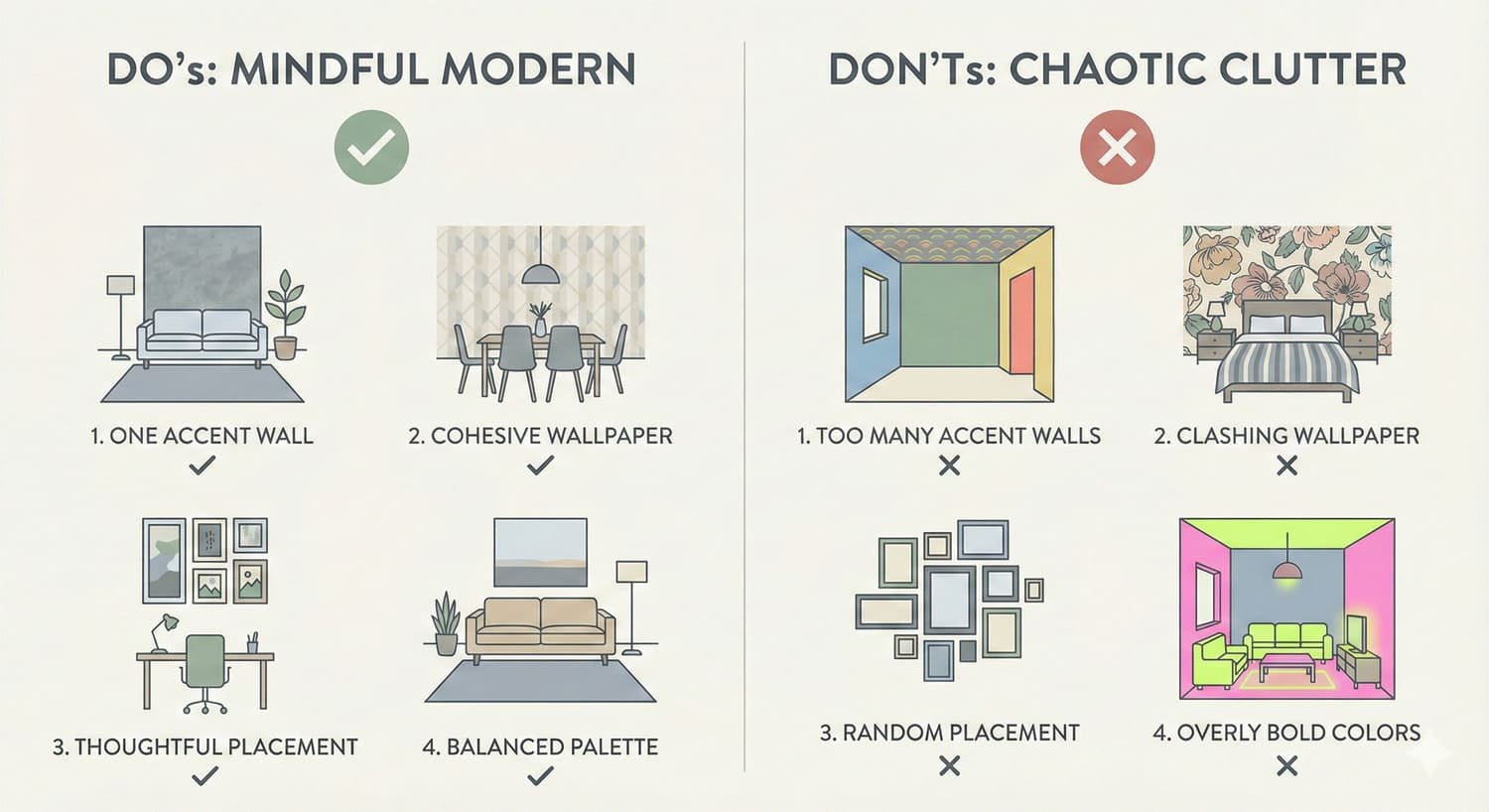
Let’s save you some regret.
Avoid:
- Making every wall an accent wall
- Picking a random wall with no purpose
- Using colors that clash with existing decor
- Choosing wallpaper you’ll hate in 2 months
If you create an accent wall that screams chaos, your tiny room may start plotting against you. FYI.
Final Thoughts: Small Spaces, Big Personality
Small rooms don’t need to feel boring or unfinished. A thoughtful accent wall can change the entire feeling of a space with surprisingly little effort.
And honestly? The moment you step back and admire the transformation — that’s the chef’s kiss.
So go for it. Paint the wall. Try the wallpaper. Install the paneling.
If you hate it later… paint exists. It’s fine.
Ready to make your tiny room look seriously amazing?
Start with one wall — the rest might follow.