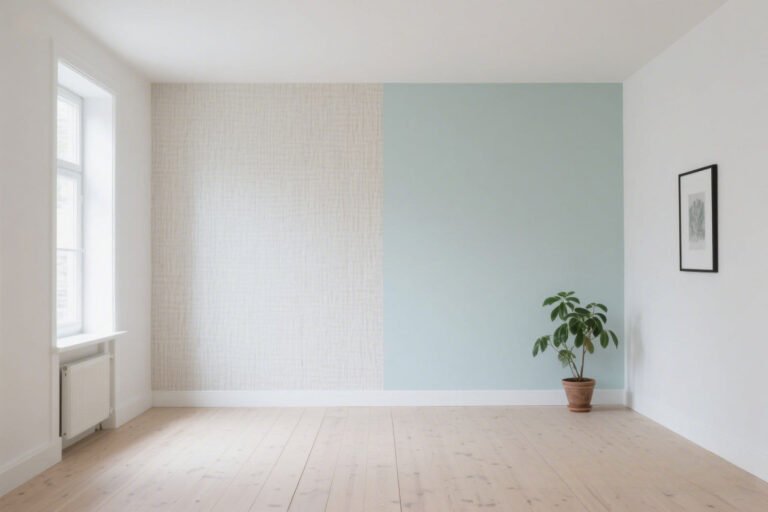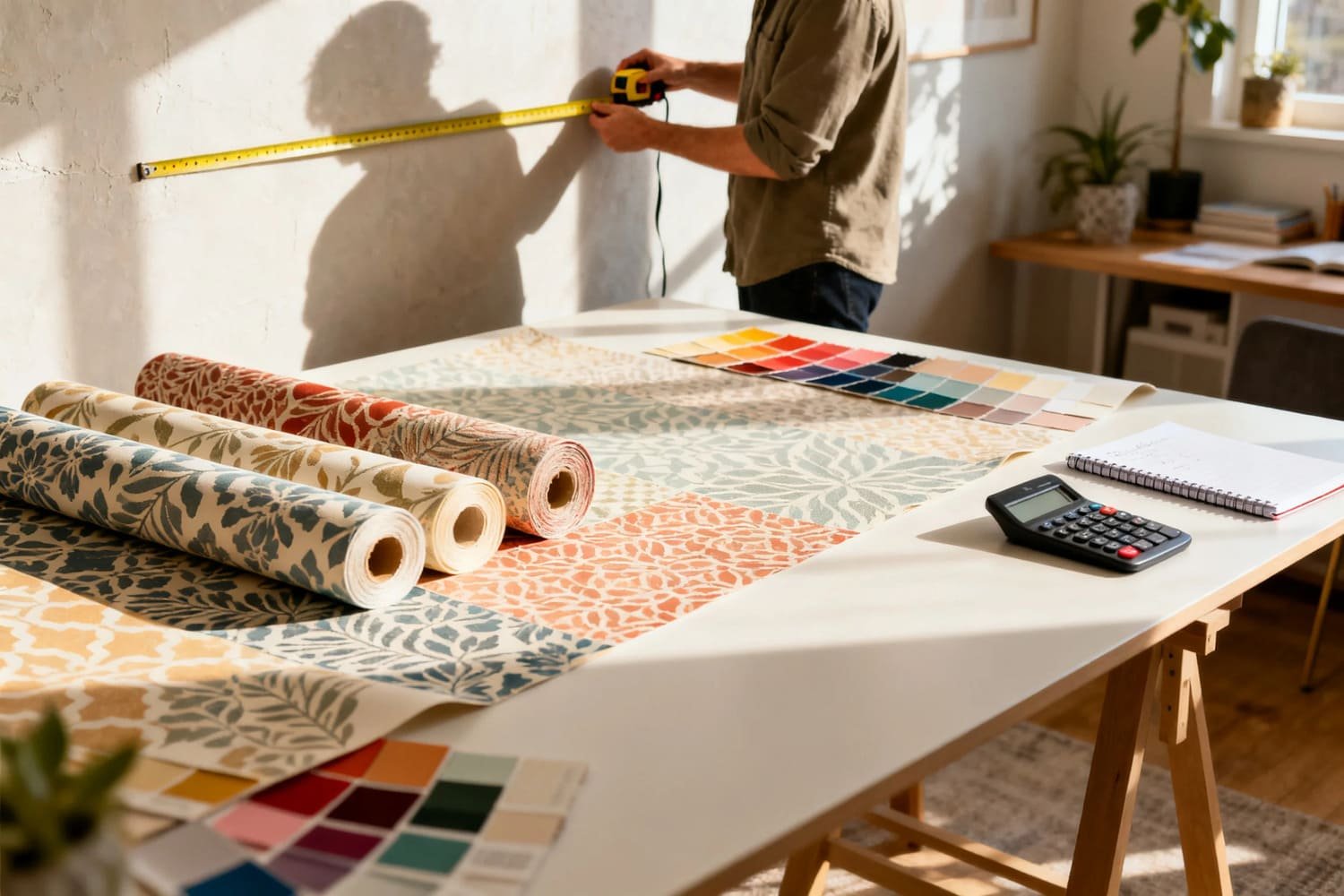
How to Calculate How Much Wallpaper You Need (And Avoid Costly Mistakes)
Let’s be real—nothing crushes your home-decor dreams faster than realizing you miscalculated your wallpaper and now the store ran out of that “perfect but also apparently limited edition” pattern. Yep… been there. Twice.
If you want to avoid pulling your hair out halfway through your project, you need a simple, stress-free method to figure out exactly how much wallpaper to buy.
And trust me, once you learn the math (don’t panic), you’ll never underestimate again.
So let’s break it down like two friends chatting over coffee. Ready?
Why Calculating Wallpaper Matters (More Than You Think)
You probably think, “It’s just wallpaper. How complicated can it be?” Oh, friend…
I asked myself the same thing once. Then I watched a gorgeous geometric pattern line up perfectly until—boom—a two-inch gap at the end of the wall.
Ever seen someone stare at their wall in disbelief for a full minute? Yeah, that was me.
When you calculate correctly, you:
- Avoid buying too much wallpaper (your wallet will thank you).
- Avoid buying too little (your sanity will thank you).
- Reduce waste, especially with patterned rolls.
- Ensure consistent dye lots so your walls look uniform instead of “omg why is that strip a slightly different shade?” 🙂
Ever wondered why designers make this look easy? Because they always calculate before they buy.
Step 1 — Measure Your Walls Like a Pro
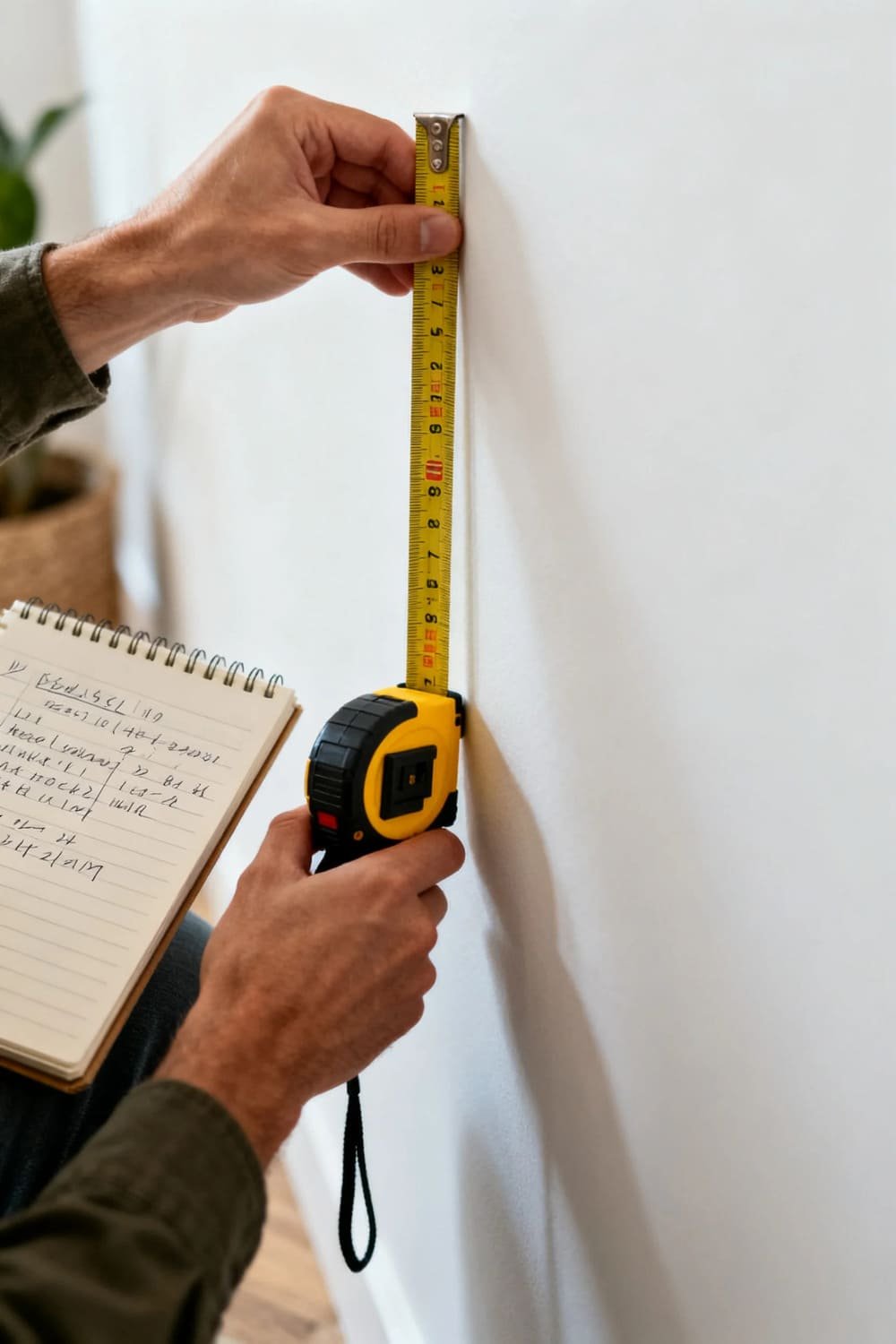
Grab Your Tools First
You don’t need anything crazy. Just:
- A tape measure
- A calculator
- A notebook or notes app
- Possibly a snack, because measuring always takes longer than you expect IMO
Measure Wall Height and Width
You only need two numbers:
- Total width of the wall
- Height from baseboard to ceiling
Keep measuring simple:
- Measure the height of the wall.
- Measure the width of each wall you plan to cover.
- Add all widths together.
Boom—you’re already halfway to wallpaper glory.
Pro tip: Measure twice. I swear walls like to stretch when you’re not looking.
Step 2 — Calculate the Total Square Footage
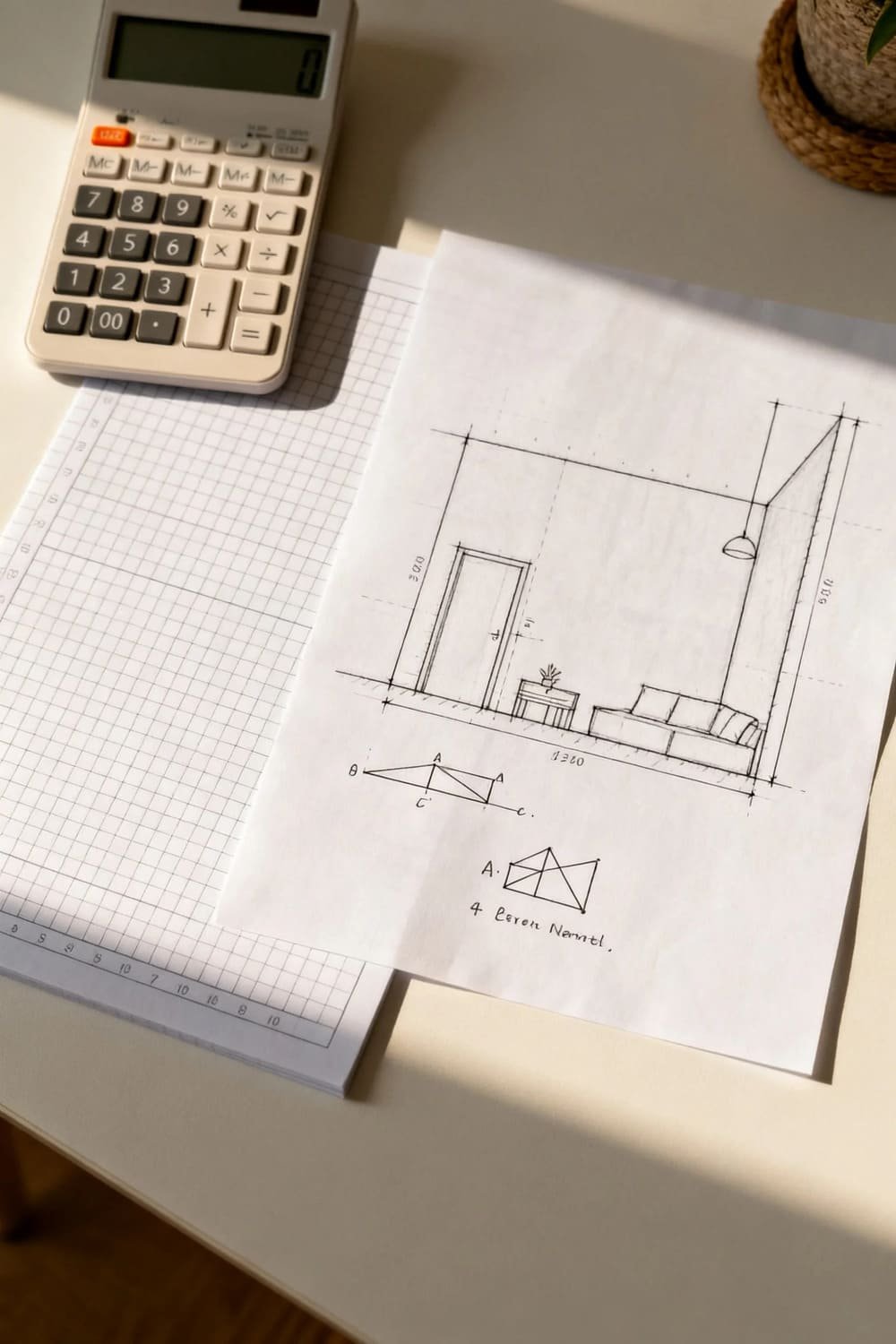
Let’s keep this easy.
Formula you actually need:
Total Wall Area = Total Width × Height
Example:
- Height: 9 ft
- Total width: 28 ft
Total wall area = 9 × 28 = 252 sq ft
See? Zero pain. Zero drama.
Ever wondered why people mess this up? Because they skip steps. Don’t skip steps.
Step 3 — Check the Wallpaper Roll Coverage
Wallpaper rolls aren’t universal (because why would anything be simple, right?).
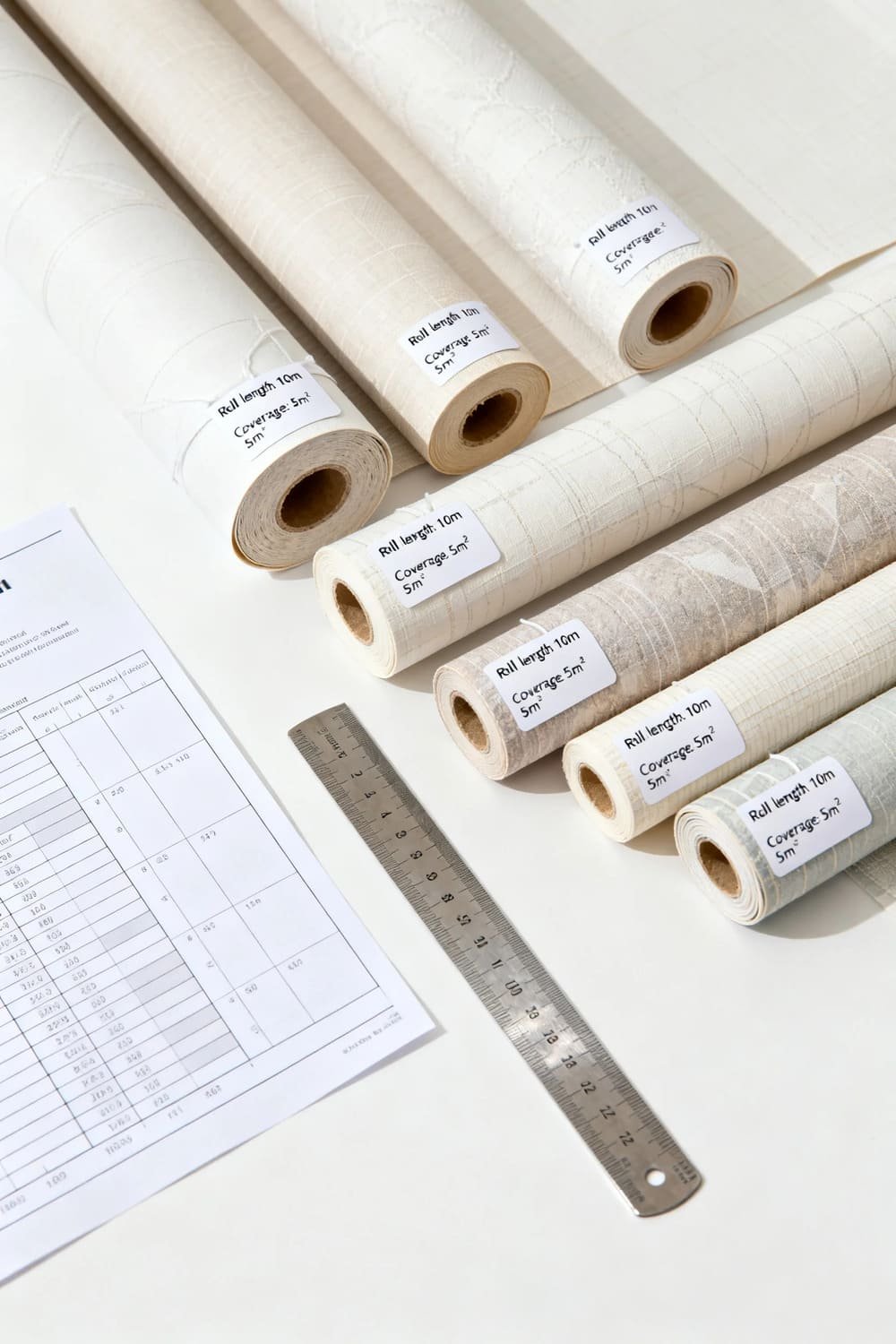
Here are the common sizes:
Standard Single Roll
- About 20.5 in wide
- Covers about 28 sq ft
Standard Double Roll
- Same width
- Covers about 56 sq ft
European Roll
- 20.5–21 in wide
- Usually 33 ft long
- Covers 50+ sq ft
Peel-and-Stick Rolls
These vary wildly. Some cover 30 sq ft, some 55 sq ft, and some pretend to cover that much (but the pattern repeat eats half of it :/).
Always check the product listing for exact coverage.
And yes, I learned that the hard way too.
Step 4 — Factor in the Pattern Repeat
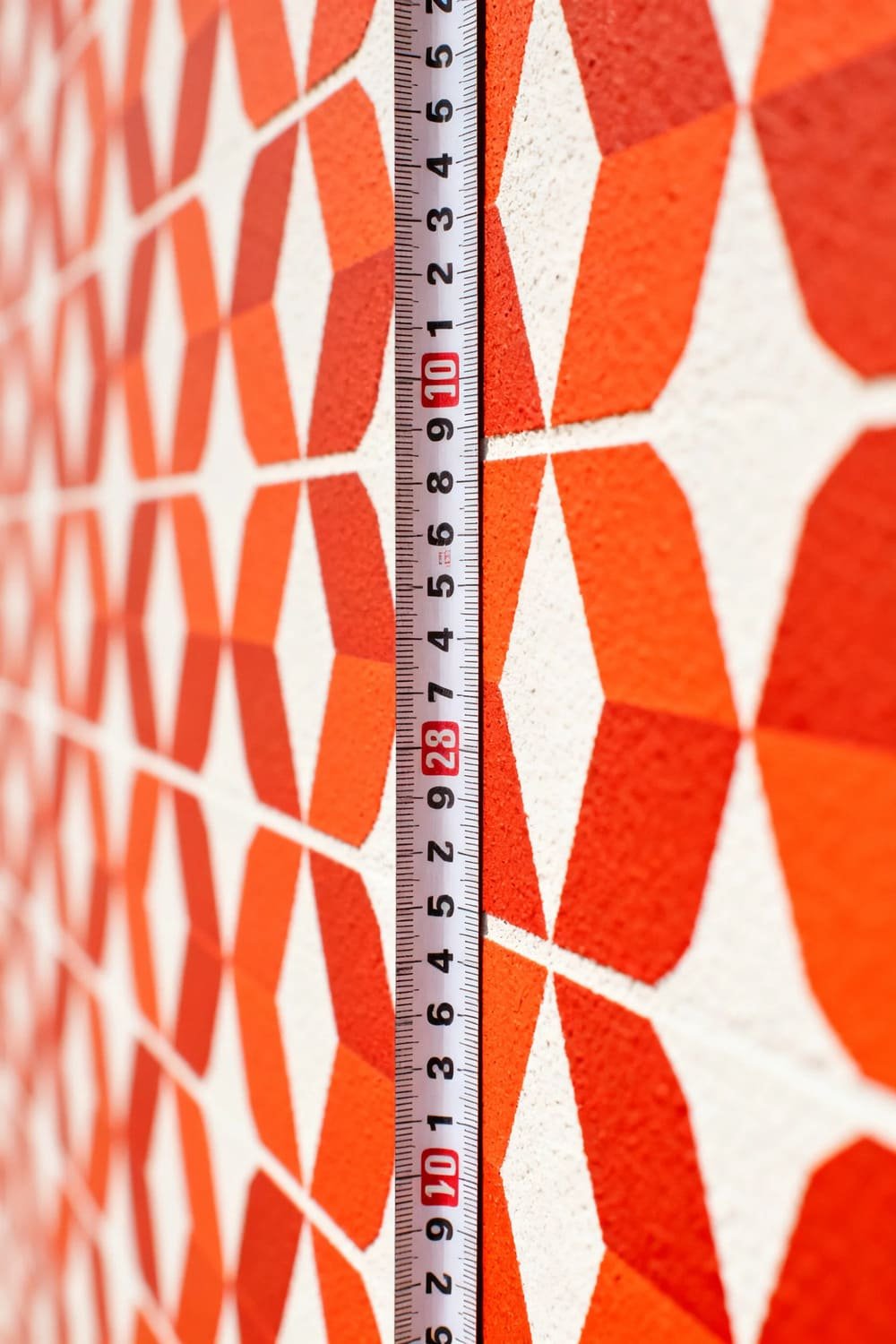
If your wallpaper has no pattern repeat, you can skip this entire section and feel victorious.
But if your wallpaper has a pattern that needs to align? Yeah, you need to account for extra material.
What Is Pattern Repeat?
It’s the vertical distance before the pattern starts over.
Common repeats:
- 0 in (solid colors or random textures)
- 12 in
- 20 in
- 25 in (fancy patterns love making us suffer)
Why Pattern Repeat Changes Everything
Ever wondered why your perfect floral wallpaper suddenly needed two extra rolls?
Pattern repeat. Always pattern repeat.
The bigger the repeat, the more excess you need to line everything up.
Simple Pattern Repeat Rule
If the pattern repeat is more than 10 inches, add 20–30% extra wallpaper.
Or use this simple trick:
Adjusted Strip Length = Wall Height + Pattern Repeat
Example:
- Wall height: 9 ft
- Pattern repeat: 20 in (1.66 ft)
Adjusted strip length = 9 + 1.66 = 10.66 ft
Now you know the actual strip length needed per drop.
Step 5 — Calculate Number of Strips Per Roll
Time to get slightly nerdy (just slightly).
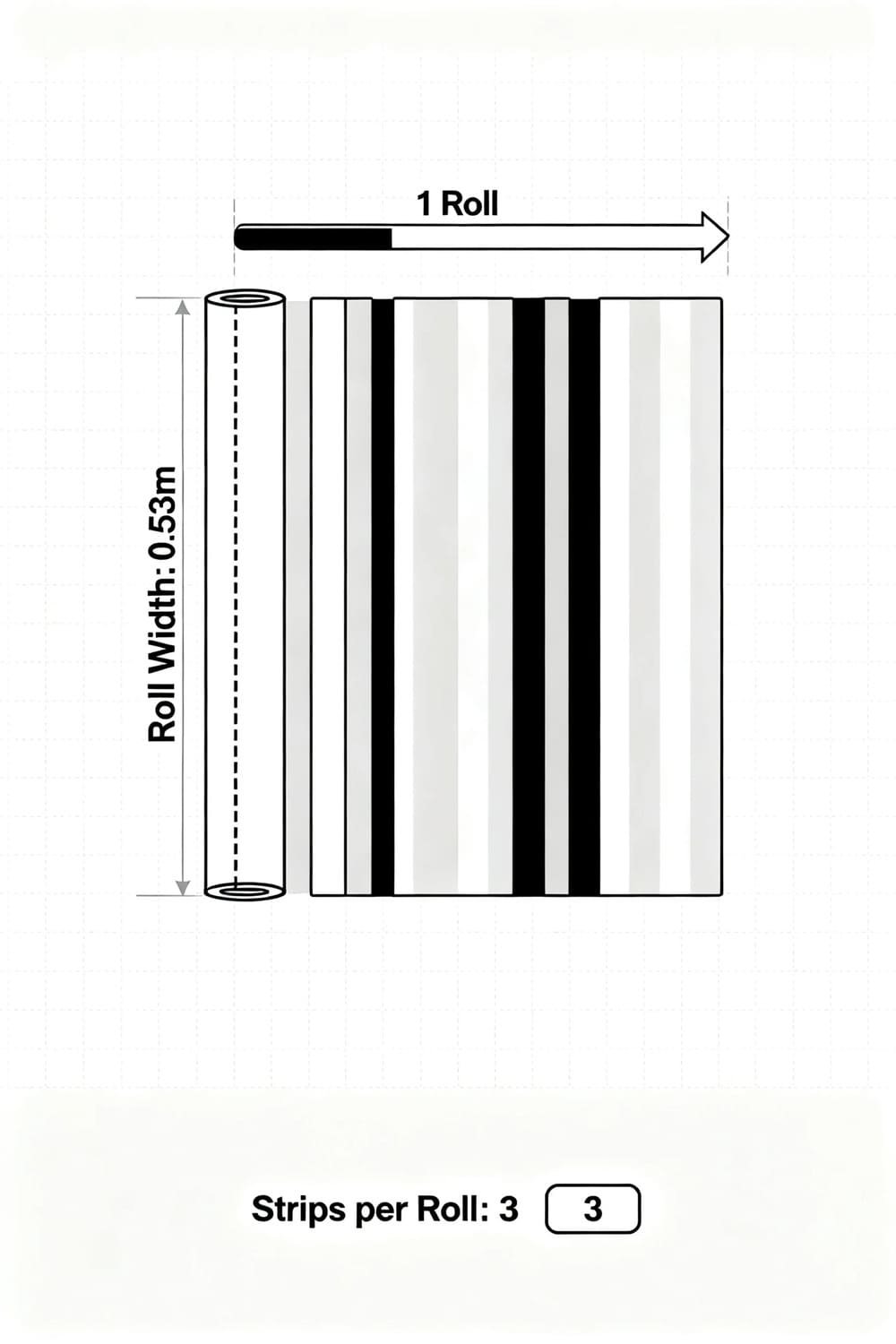
Step-by-Step Breakdown
- Convert roll length to feet if needed.
- Divide roll length by adjusted strip length.
- That number = how many strips you get per roll.
Example:
- Roll length: 33 ft
- Adjusted strip length: 10.66 ft
33 ÷ 10.66 ≈ 3 strips per roll
Now Calculate How Many Strips Your Wall Needs
Use this:
Number of Strips = Total Wall Width ÷ Roll Width
If roll width is 20.5 in (1.7 ft) and wall width is 28 ft:
28 ÷ 1.7 ≈ 16.47 — round up → 17 strips
Final Step
Total Rolls Needed = Strips Needed ÷ Strips Per Roll
In this case:
17 ÷ 3 = 5.67 → round up to 6 rolls
Boom—calculated.
Step 6 — Don’t Forget Allowances for Windows & Doors
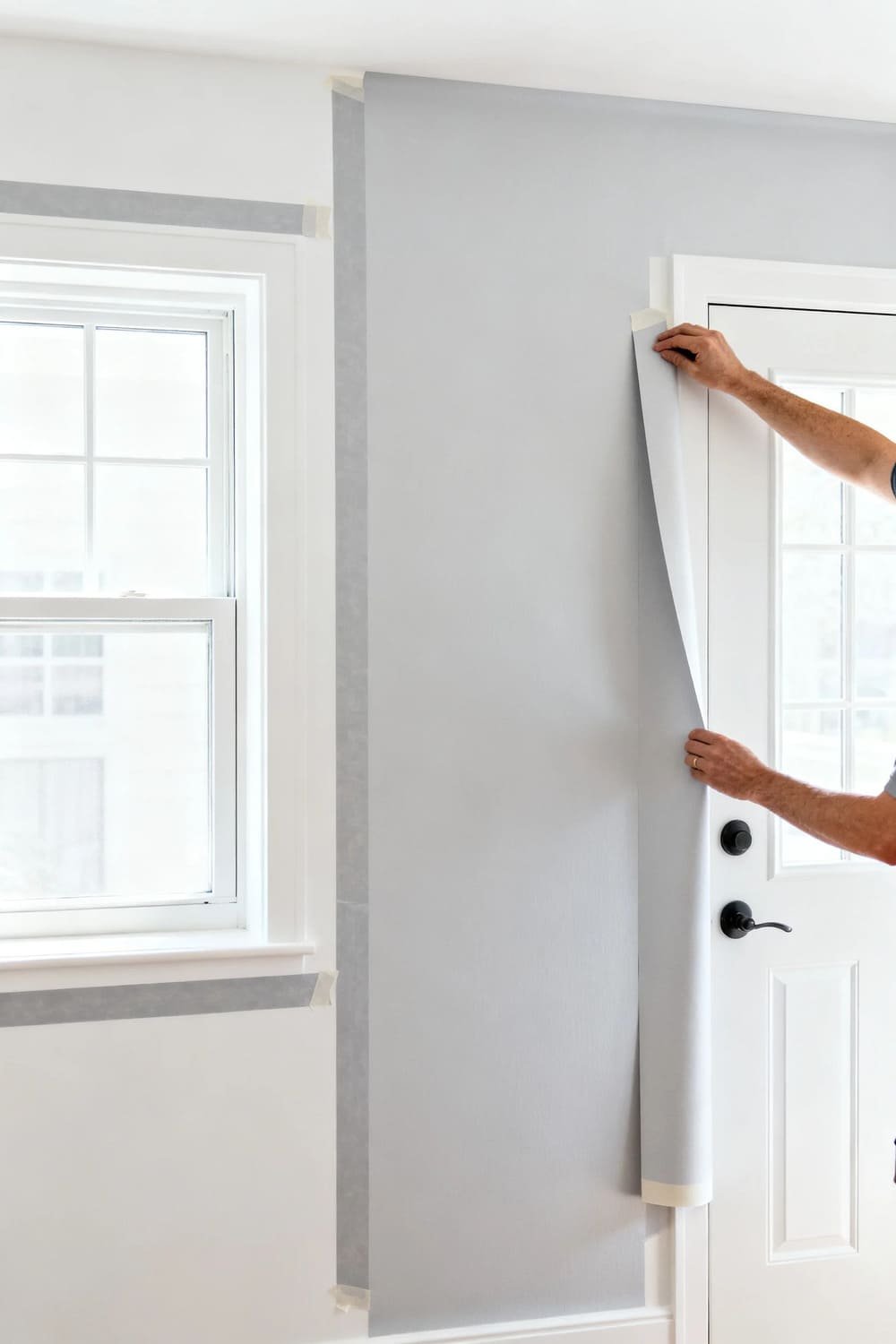
I know you want to subtract them.
But don’t. Seriously.
Why?
Because:
- You still need full-length strips on both sides.
- Most cutouts fall mid-strip.
- You never get back enough material to change roll quantity.
Always calculate the wall as if nothing interrupts it.
Windows lie. Doors deceive. Trust me.
Step 7 — Add Extra Rolls (Yes, You Really Should)
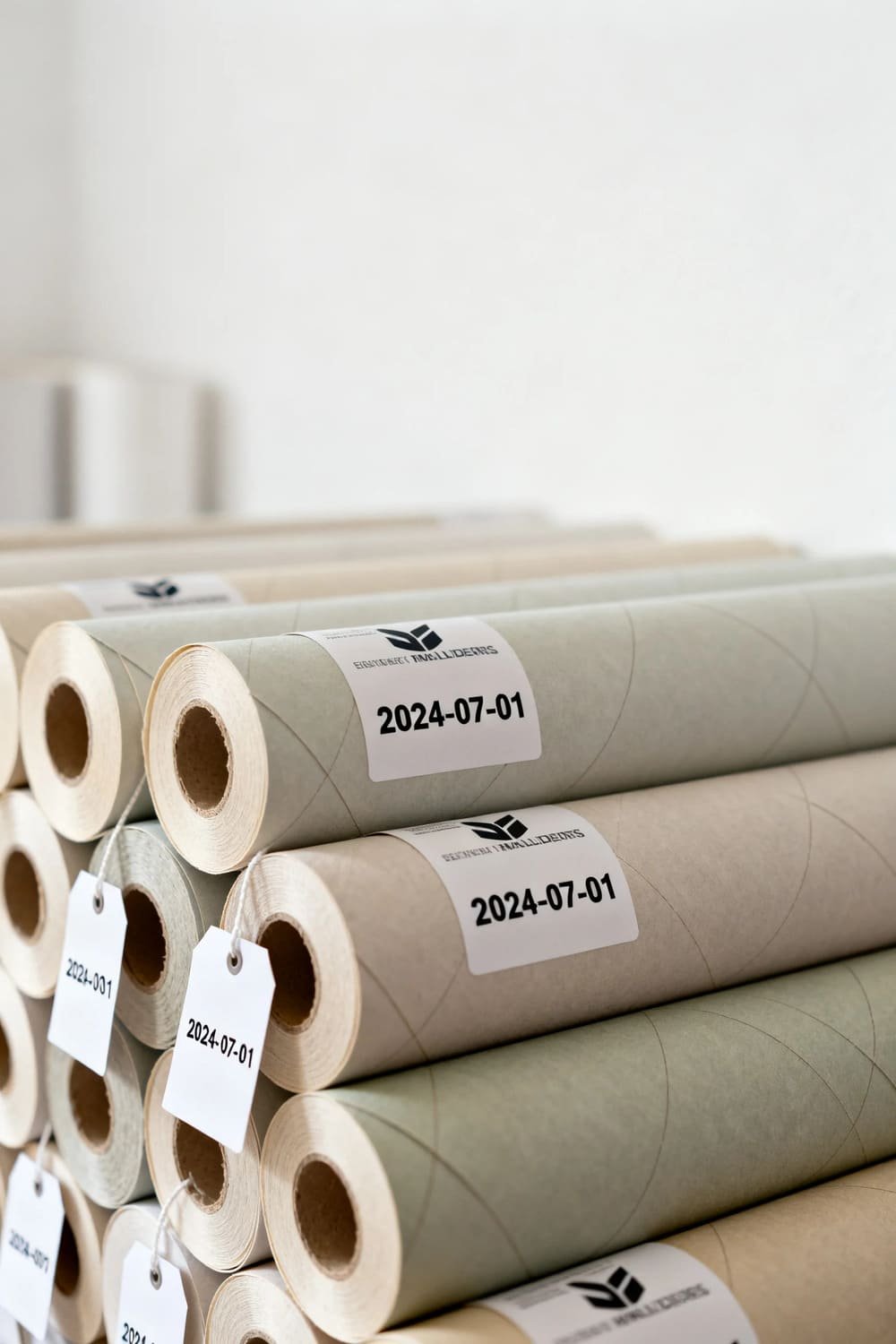
Here’s the part nobody wants to hear:
You need extra wallpaper.
But here’s why:
- Dye lots change constantly.
- You might tear a strip.
- You might miscut (been there).
- You might need extra for trimming.
How Many Extras?
- No pattern repeat: Add 1 extra roll.
- Small repeat: Add 1–2 extra rolls.
- Large repeat: Add 2–3 extra rolls.
I know you feel skeptical. But you’ll feel 10x worse when the store says,
“Oh sorry, that batch is discontinued.”
I got that answer once. I stared at the cashier like I just witnessed betrayal.
Step 8 — Quick Wallpaper Calculation Formula (Bookmark This!)
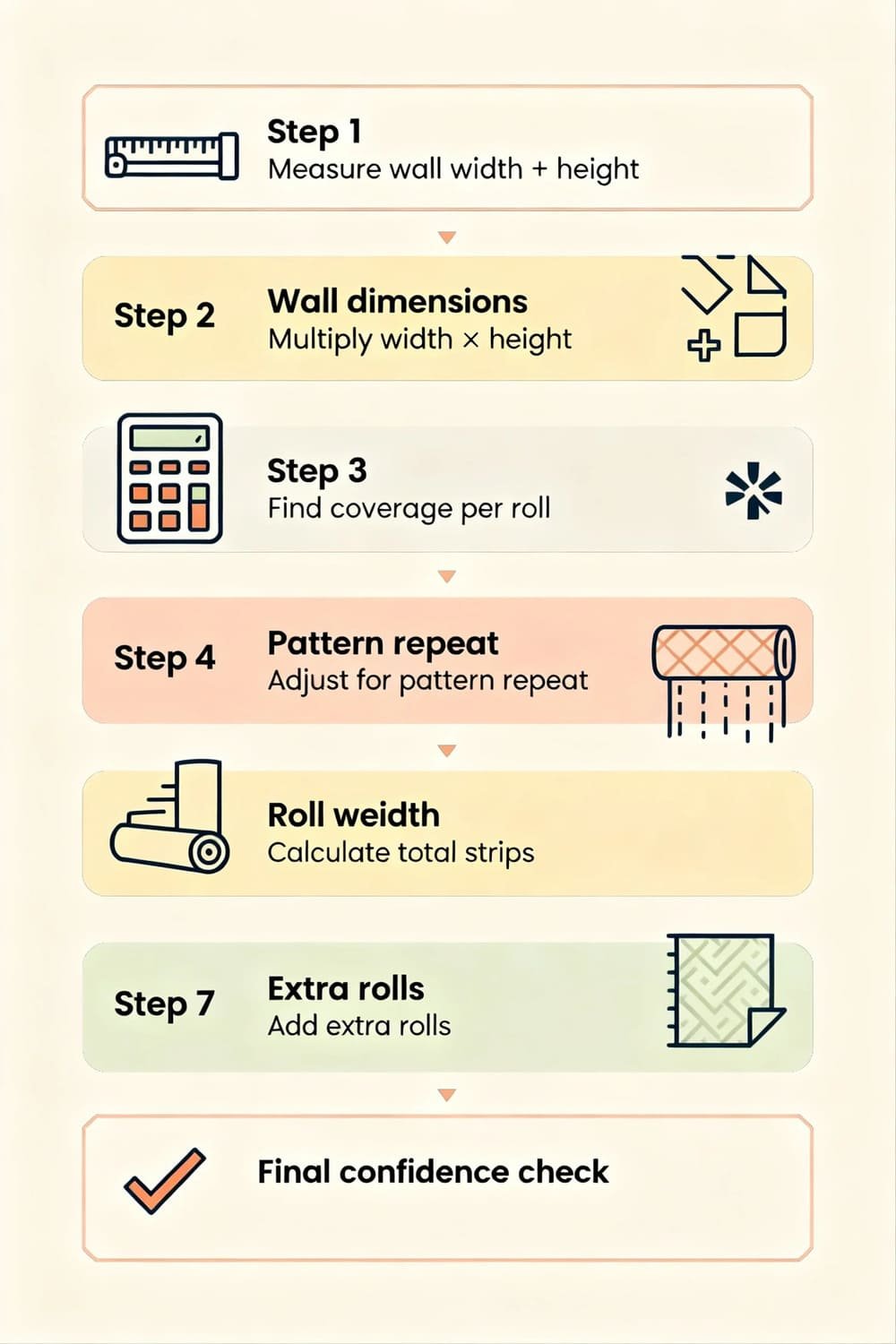
Here’s your cheat sheet:
- Measure wall width + height.
- Multiply width × height = total square feet.
- Find coverage per roll.
- If patterned, calculate adjusted drop length.
- Calculate strips per roll.
- Calculate strips needed.
- Add extra rolls.
- Buy confidently like the wallpaper boss you are.
Whenever someone asks you how you got so good at this, feel free to wink. FYI that always helps sell the confidence.
Extra Tips That Save You Money (And Regret)
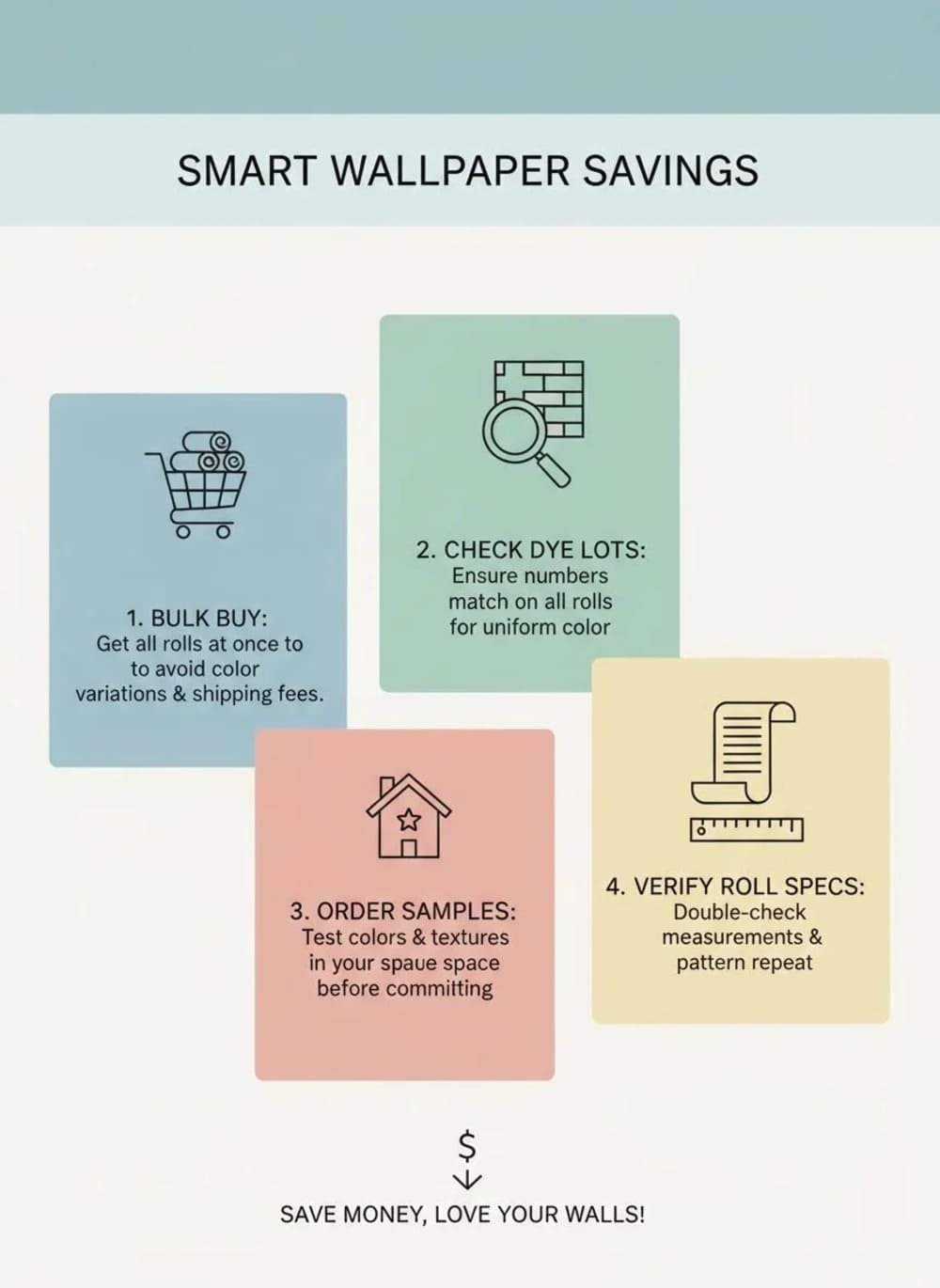
Tip 1 — Buy All Rolls at Once
Always buy rolls in a single order.
Same dye lot = same color.
Different dye lot = slight shade differences that will haunt you.
Tip 2 — Order Samples First
Never trust monitor colors.
Sample = truth.
Tip 3 — Double-Check Roll Specs
Even within the same brand:
- Width varies
- Length varies
- Coverage varies
Assuming they’re the same creates chaos.
Tip 4 — Don’t Rely on Online “Coverage Estimates”
Some websites assume zero pattern repeat.
Some assume magical straight walls.
Some assume you’re a wizard.
Always do your own math.
Common Wallpaper Calculation Mistakes (Avoid These!)
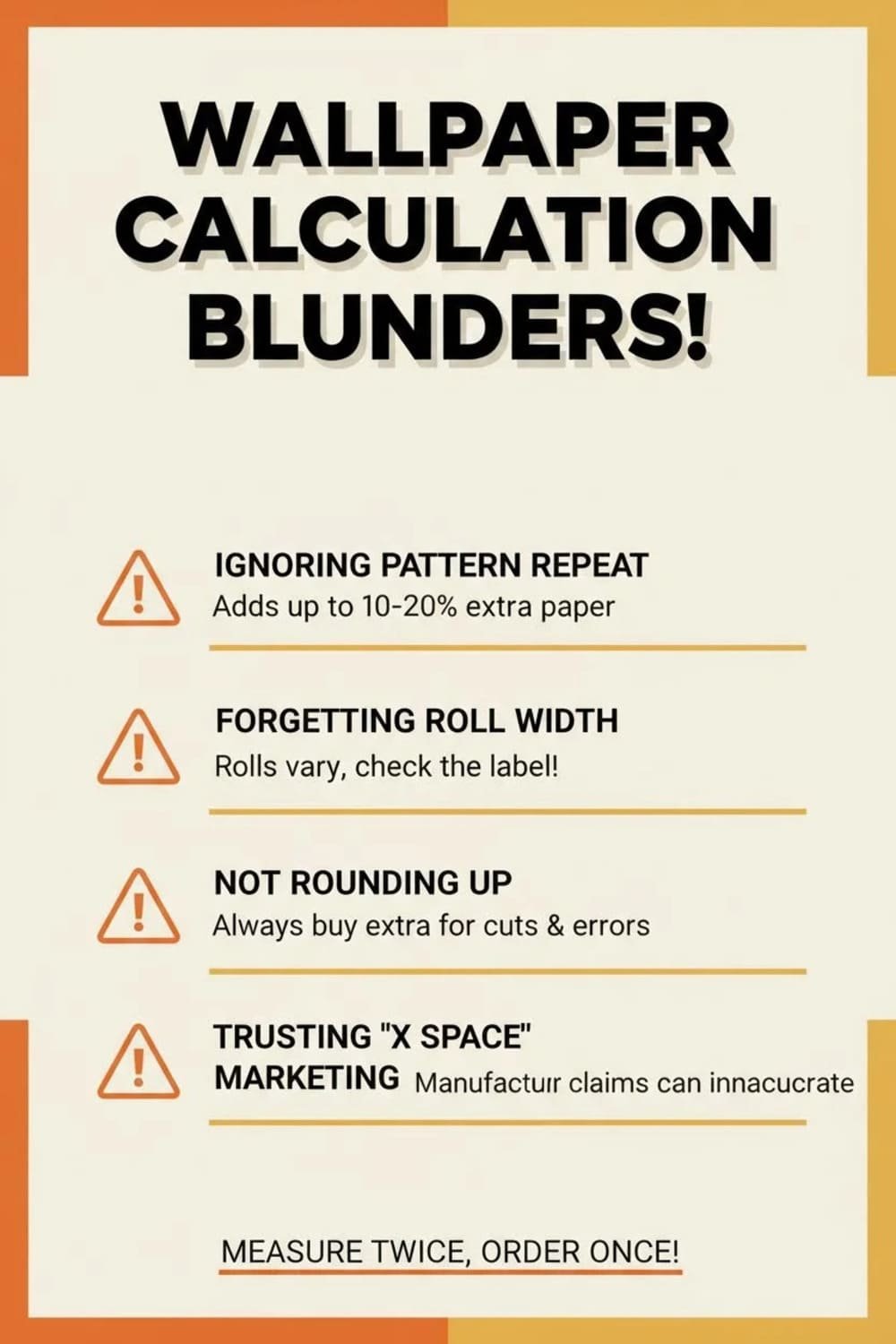
Mistake 1 — Ignoring Pattern Repeat
This one destroys calculations faster than anything else.
If you only remember one thing from this article, remember pattern repeat matters.
Mistake 2 — Forgetting Roll Width
Coverage isn’t just about length.
Roll width changes strip quantity dramatically.
Mistake 3 — Not Rounding Up
Rounding down = guaranteed disaster.
Always round up.
Mistake 4 — Trusting the “One Roll Covers X Space” Marketing
Those numbers rarely include trimming, alignment, or real-life walls that aren’t perfectly straight (spoiler: none of them are).
Conclusion
Calculating how much wallpaper you need doesn’t have to feel like solving a secret code from an ancient civilization.
Once you know the simple steps—measure, calculate, check pattern repeat, add extra—everything clicks into place.
Your walls will look intentional.
Your patterns will line up.
And your future self will thank you for not panic-buying mismatched rolls online at midnight.
So grab your tape measure, grab your calculator, and tackle your next wallpaper project like the confident home-decor genius you are.
And hey—if someone asks how you suddenly got so good at this, you can say you read a guide that didn’t bore you to tears.